
Fishing jigs look simple, but the wrong jig can sink too fast, miss the target water layer, bend under pressure, or sit unsold in a tackle store because it does not match local fishing habits. For anglers and wholesale buyers, the real value is knowing which jig type fits which fish, water depth, cover, and retrieve style.
Laike supplies fishing tackle for buyers who need practical product ranges across fishing hooks, lures, rods, reels, lines, accessories, and fishing combos. For jig-related sourcing, the useful point is not only buying one lure style. Buyers often need a working assortment that covers jig heads, skirted jigs, assist hooks, packaging, and OEM needs. That matters for retailers, online sellers, and distributors because end users compare weight, hook sharpness, lure movement, and target fish before they reorder.
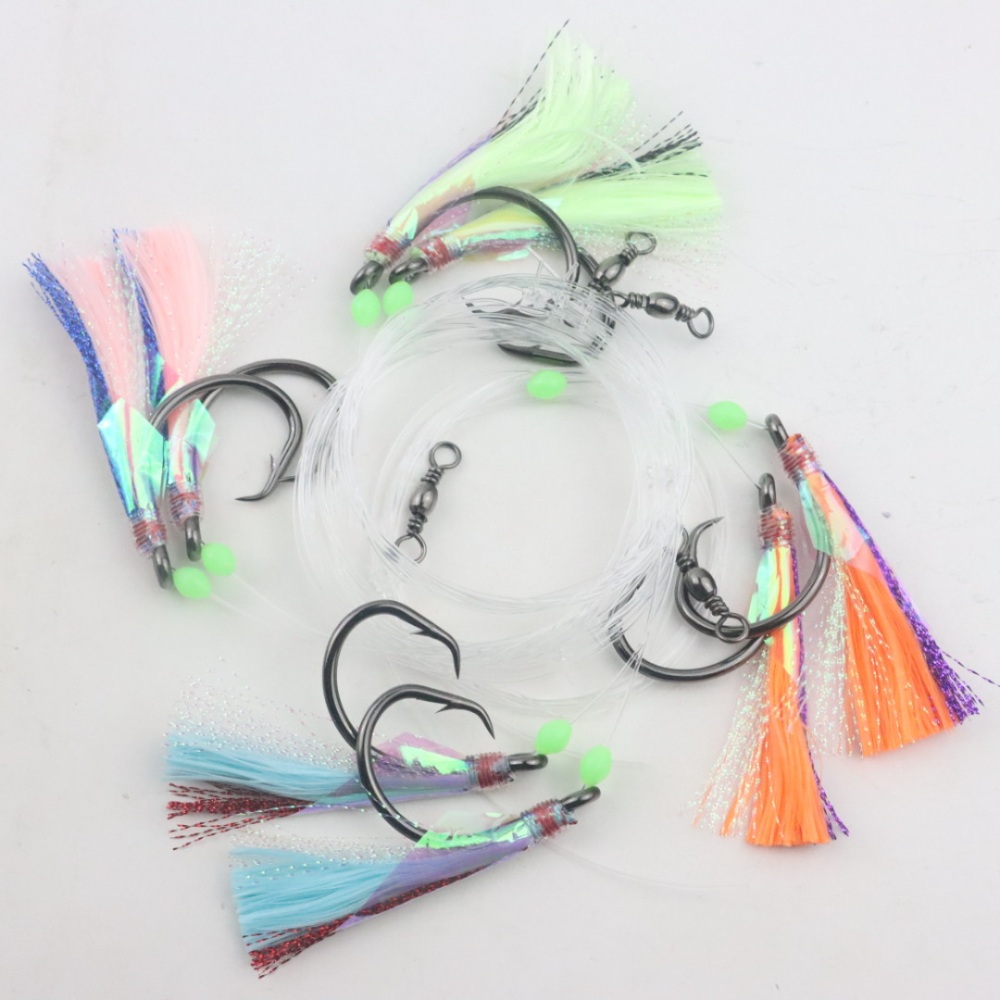
What Are Fishing Jigs And Why Do Target Species Matter?
A jig combines weight, hook function, and lure action. Some are built for bottom contact. Some move like baitfish. Some add skirt movement to trigger predators. Before choosing a product, the buyer should first ask what fish the customer targets and where the jig will be used.
Weighted Head, Hook, And Skirt Structure
A jig head controls sink rate and bait posture. A skirt adds motion and visual attraction. The hook controls penetration and holding power. For standard soft bait rigs, Lead Jig head Fishing hooks can act as the basic jig head series in a tackle assortment. The product page lists 7g, 10g, 15g, 21g, 28g, and 35g options, which helps buyers cover shallow water, current, and deeper holes without building an overly complicated SKU range.
Common Types And Practical Uses
| Jig Type | Better Use Case | Target Species Direction | Buyer Note |
|---|---|---|---|
| Jig Head | Soft bait rigs and bottom contact | Bass, perch, walleye, flounder | Useful as a core SKU |
| Swim Jig | Moving baitfish imitation | Bass, seabass, active predators | Needs stable movement |
| Flipping Jig | Grass, brush, and cover | Freshwater bass | Weight and hook strength matter |
| Skirted Squid Jig | Visual action and coastal use | Squid-style and predator presentations | Good for mixed lure kits |
| Assist Hook Setup | Vertical jigging and stronger fish | Larger or harder-fighting fish | Hook material is key |
Fishing jigs for different target species should be grouped by fish behavior first, then by depth and cover. A bass holding near grass does not need the same setup as a fish feeding near the bottom in current.
Product Details That Buyers Should Check
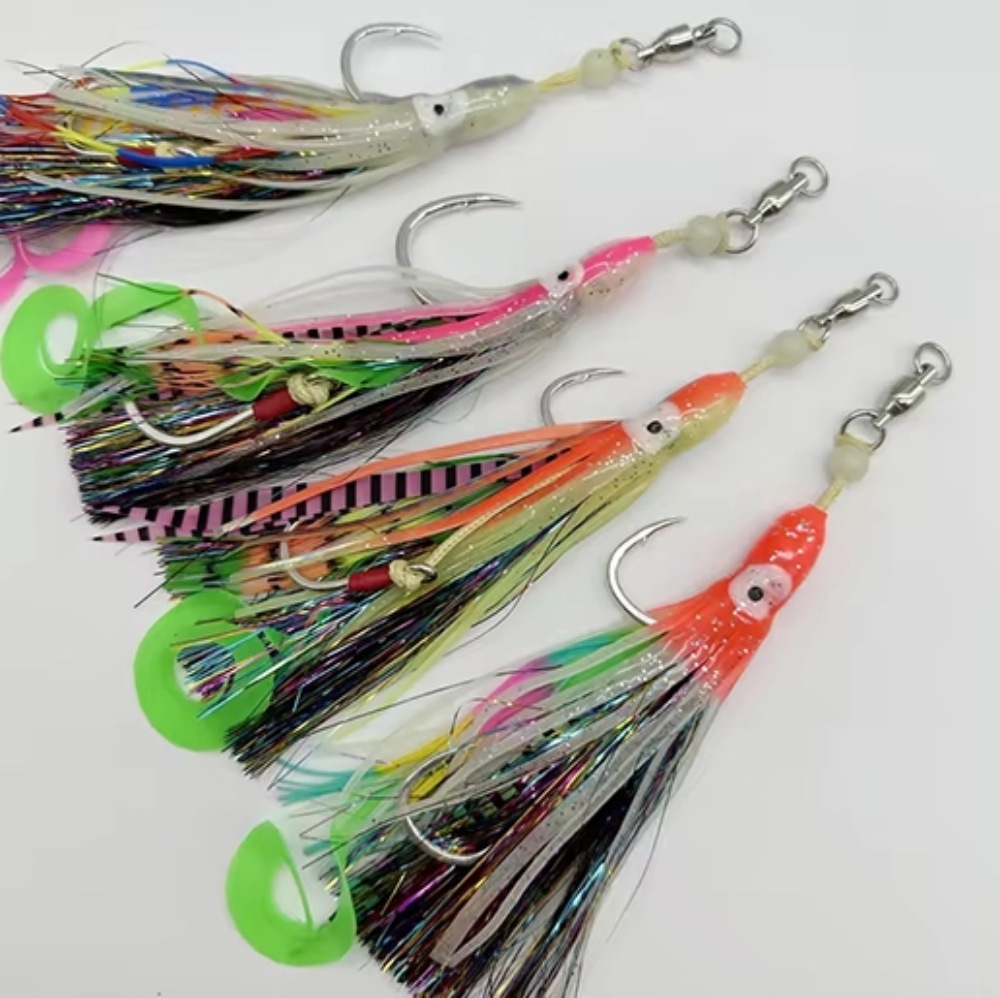
Visible product details help reduce sourcing risk. Buyers should check weight range, hook material, hook point treatment, barb design, packing style, and OEM availability. For skirted presentations, Octopus Squid Skirts Jig uses High Carbon Steel and PVC, with 2/0-5/0# sizing, 10g weight, and 5 colors listed on the product page. That makes it easier to position as a visual-action item, not just another plain jig head.
Which Fishing Jigs Work Best For Different Target Species?
A good selection starts with the fish, then narrows by water condition. This also works for B2B buyers planning a product line. A stronger product range should cover daily-use jig heads, skirted action, and hook support for stronger fish instead of relying on one universal item.
Bass Fishing Jigs For Freshwater
Bass fishing jigs for freshwater should cover shallow banks, weed edges, and deeper structure. Light jig heads help create a slower fall in shallow or clear water. Medium weights give better control around rocks, grass, and river current. For a basic bass assortment, Lead Jig head Fishing hooks can cover common soft bait use while keeping the product line easy to explain to end users.
Bottom Fish And Deep Holes
Fish that stay near the bottom need a jig that drops cleanly and keeps the bait in the strike zone. Heavier jig heads work better for deeper holes, current, or faster bottom contact. Buyers should avoid choosing only by appearance here. Hook sharpness, barb design, and weight consistency are more important than bright colors.
Saltwater Predators And Skirted Action
For coastal or predator-focused lure assortments, Octopus Squid Skirts Jig fills the visual-action category. Its skirt profile gives the product line a different role from plain jig heads, especially when customers ask for more movement in the water. It can also help retailers build a broader lure kit for saltwater and mixed predator fishing.
How Should You Use a Jig Head Weight Selection Guide?
A Jig head weight selection guide should be used as a practical starting point, not a fixed rule. Wind, current, water depth, bait size, and fish activity all change the choice. For buyers, weight range also affects inventory. Too few weights limit usage. Too many sizes may create slow-moving stock.
Light Weights For Shallow And Clear Water
Light jig heads fall slower and look more natural in shallow water. They work well when fish are cautious or when the angler wants more time in the strike zone. Heavy vs light jigs for bass is mainly a question of fall speed and control, not only fish size.
Medium And Heavy Weights For Control
Medium weights cover many common freshwater situations. Heavy jig heads reach deeper water faster and hold better in current. A buyer serving mixed freshwater users should stock more than one weight rather than pushing one all-purpose option.
Buyer Questions And Product Direction
| Buyer Question | Better Choice | Why It Works | Laike Product Direction |
|---|---|---|---|
| Customers fish shallow ponds or banks | Light jig head | Slower fall and easier soft bait control | Lead Jig head Fishing hooks |
| Customers fish current or deeper holes | Medium to heavy jig head | Faster sink and better bottom contact | Lead Jig head Fishing hooks |
| Customers ask for more visual action | Skirted jig | More movement and stronger profile | Octopus Squid Skirts Jig |
| Customers target stronger fish | Assist hook setup | Better holding support under pull | Strong Carbon Steel Jigging Assist Hooks |
| Retailer wants a basic jig range | Mixed jig heads plus skirted option | Covers more use cases | Combined jig product line |
How Can a Swim Jig vs Flipping Jig Comparison Help Buyers Choose?
A Swim jig vs flipping jig comparison helps buyers avoid choosing by appearance only. Swim jigs are made to cover water. Flipping-style use is for cover and structure. Both can be useful, but they solve different fishing problems.
Swim Jigs For Moving Fish
Swim jigs work with steady retrieve, small rod movement, and soft pauses. They are used when fish are willing to chase baitfish-style motion. A skirted product such as Octopus Squid Skirts Jig can support this moving presentation because the skirt profile adds motion and visibility.
Flipping Jigs For Cover
Flipping-style fishing is more about placing the jig near grass, wood, rocks, or tight cover. The jig must enter the target area and stay controlled. In this use, weight and hook strength matter more than decoration. Lead Jig head Fishing hooks can support this section of a product line when paired with the right soft bait.
Stronger Hooks For Bigger Pressure
For vertical jigging or stronger fish, the hook must hold under repeated pulling. Strong Carbon Steel Jigging Assist Hooks should be positioned as a strength-focused accessory. The product page lists High Carbon Steel Fishing Hooks, MOQ 100 bags, and OEM packing support, which are useful details for buyers planning bulk or private-label orders.
What Should Buyers Check Before Ordering Fishing Jigs?
Product selection should be checked from real user demand, not only price. A cheap jig that bends, rusts quickly, sinks poorly, or does not match local fish species can create complaints and weak repeat orders.
Common Buying Mistakes That Create Slow-Moving Stock
Many jig complaints come from mismatch. A jig head that is too heavy may sink too fast in shallow water. A light jig may fail to hold bottom in current. A skirted jig may look attractive on the shelf but sell slowly if the local market mainly buys plain jig heads for soft plastics. A safer method is to build a layered range: basic jig heads for daily use, skirted jigs for visual action, and stronger assist hooks for heavier jigging demand.
Final Product Range For Different Buyers
For a simple freshwater range, start with Lead Jig head Fishing hooks in light and medium weights, then pair them with common soft baits. For saltwater or visual lure demand, add Octopus Squid Skirts Jig to cover skirted action. For vertical jigging, larger fish, or customers who complain about weak hooks, add Strong Carbon Steel Jigging Assist Hooks. This gives the line a clear structure: standard jig heads for daily use, skirted jigs for movement, and assist hooks for stronger holding power.
Service And Product Communication
If you are planning a fishing jigs product line, prepare details such as target market, common fish species, preferred weight range, packaging style, and OEM labeling needs. Laike can help match jig heads, skirted jigs, assist hooks, and related tackle items based on those details. For product lists, sample questions, packing requirements, or bulk order discussion, use the contact page and share your sales channel and target users clearly.
FAQ
Q: What Are Fishing Jigs Used For?
A: Fishing jigs are used to imitate small fish, shrimp, squid, crawfish, or bottom prey. Their use depends on head weight, hook style, skirt movement, soft bait pairing, and retrieve method. They can work in freshwater and saltwater when matched with the right target species and water condition.
Q: What Is The Best Jig Weight For Bass Fishing?
A: There is no single best weight. Light jigs are better for shallow water, clear water, and slower presentations. Heavier jigs are better for deep water, current, and stronger bottom contact. A practical bass range should include light and medium options so anglers can adjust on the water.
Q: Which Laike Product Is Better For Wholesale Fishing Jig Buyers?
A: Lead Jig head Fishing hooks are useful for standard jig head assortments. Octopus Squid Skirts Jig fits skirted and visual lure demand. Strong Carbon Steel Jigging Assist Hooks support jigging setups that need stronger hook holding power. Carrying all three helps buyers cover more fishing scenes than stocking only one jig type.