
A fishing swivel should be chosen from the load and layout of the whole rig, not from its size number alone. Start with the stated strength of the main line, leader, knots and any snap. Then select the smallest swivel that has a suitable published rating, rotates freely in the intended position and provides the right number of connection points. This keeps unnecessary hardware out of the presentation without making the swivel the weak link.
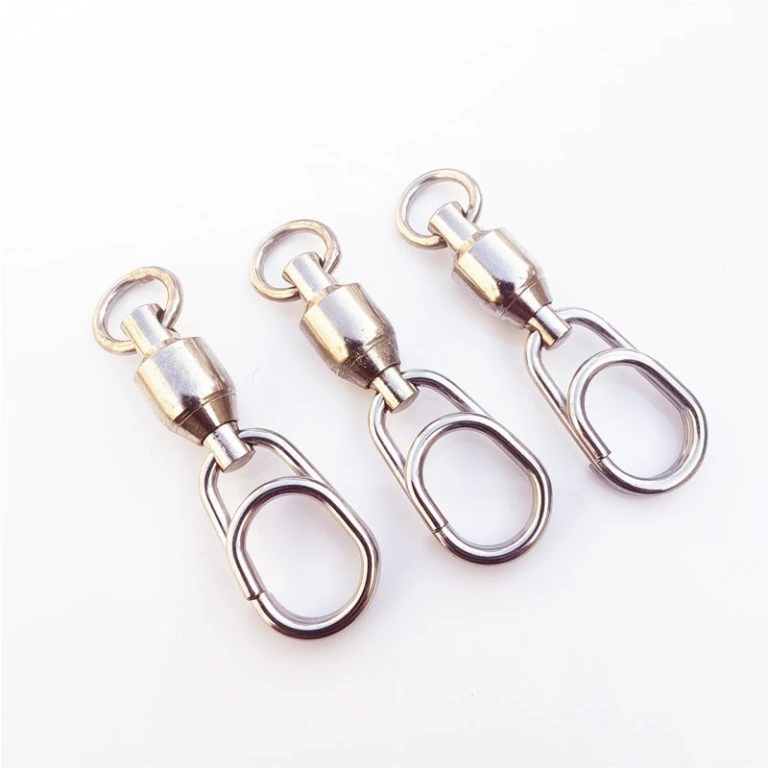
Read Strength Before Size
Swivel numbering is easy to misread because there is no universal conversion from a number to a breaking load. A number used by one product family may describe a different physical size and strength in another. Even the direction of the sequence can vary. Treat the printed size as an item identifier, then look for the rated load, dimensions and construction for that exact item.
The weakest part of a rig can be the line, a knot, the leader, a snap or the swivel. A swivel with a published strength below the load expected from the rest of the system creates an avoidable failure point. An extremely oversized swivel brings its own costs: more weight, a larger profile and poorer balance with light tackle. The practical target is adequate reserve strength in the smallest hardware that still turns and can be tied securely.
The current Laike fishing swivel specification illustrates why the item table matters. It lists seven sizes from 0 through 7, with stated strengths from 17 kg to 90 kg. Those figures belong to this product. They should not be copied to an unverified swivel that happens to use the same number.
Match the Complete Rig
Write down the rated strength of the main line and leader before choosing terminal hardware. Include any shock leader used for casting heavy sinkers. If a lighter leader is intended to break first during a snag, preserve that design instead of installing hardware that changes where the system is likely to part.
Knots also reduce the useful strength of a setup, and results vary with line material, knot choice, lubrication and tying quality. A swivel rating does not prove that the finished connection will hold the same load. Tie the production knot to the sample hardware and test the complete assembly under a controlled method when the result matters for a retail kit or a buying specification.
Do not select by target fish weight alone. The rig may see a sharp casting load, drag pressure, a sinker striking the end of travel or resistance from current. Record the intended technique, line ratings, sinker or lure weight and drag setting. That information gives a supplier a better basis for confirming the appropriate item than a request for a small, medium or large swivel.
Choose the Swivel Structure
A two-eye swivel connects two parts of a rig and allows relative rotation. It is useful where a spinning lure, bait or terminal section can put twist into the line. A closed-ring design offers a secure tie point, but it still needs enough clearance to rotate when knots, beads or sleeves sit nearby.
A snap swivel adds a releasable connection for changing lures or rigs. The snap has its own rating and closure geometry, so the swivel body cannot be treated as proof of the complete assembly’s strength. Check that the snap closes consistently, does not catch the leader and fits the lure eye without forcing it open.
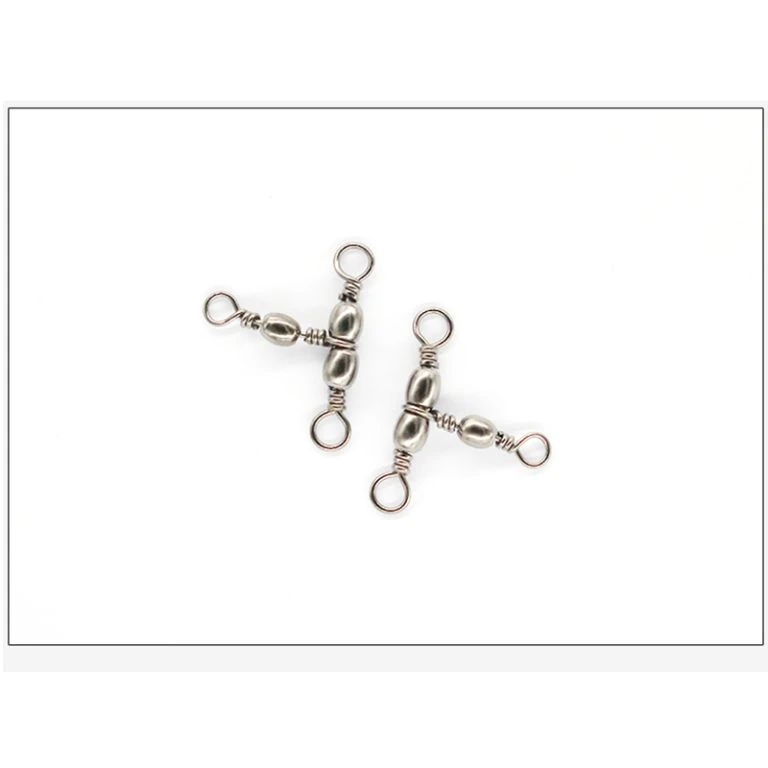
A three-way swivel creates a branch for a dropper, sinker or second leader. The Laike barrel triple swivel has three connection points and a size table with product-specific lengths and test values. Use that structure only when the rig needs a branch. Adding a third eye to a simple two-part connection creates extra bulk without solving another problem.
Check Rotation Under Real Load
A swivel that turns easily between two fingers may behave differently after it is tied into a rig. Line angle, tension and nearby components can restrict movement. Sand, salt, corrosion or a damaged eye can also increase resistance. Test a sample in the same orientation and with the same knots, beads and sleeves planned for use.
Begin with a dry visual check. Look for gaps, rough edges, distorted eyes and plating defects. Rotate each end slowly and feel for sticking or uneven movement. Then apply light tension through the line and repeat. The swivel should not be trapped against a sinker, bead or crimp in a way that prevents the body from turning.
For saltwater use, rinse and dry the rig according to the product care guidance, then check rotation again. Corrosion-resistant materials and plating reduce exposure risk but do not remove the need for care. Retire hardware that binds, shows cracks or has an eye that no longer sits in its original shape.
Keep the Swivel Clear of the Guides
A swivel should not be wound through a rod tip guide unless the tackle system is specifically designed for that passage. Metal hardware can chip a ceramic insert or jam against the tip. Leave a visible length of line or leader between the swivel and rod tip when retrieving, especially when a long leader makes it tempting to wind the connection closer.
Placement also affects lure action and presentation. A snap swivel attached directly to a small lure adds more mass and freedom than a compact snap or direct knot. In clear water or with very light tackle, the extra hardware may be unnecessary. Use a swivel when the rig can generate twist or needs a defined connection point. Leave it out when a direct connection is simpler and the lure does not rotate.
The swivel and snap category is useful for comparing available structures. Confirm the exact rating and dimensions on the selected item rather than treating the category name as a specification.
Build a Useful Retail Range
A sensible assortment covers distinct jobs. One group may serve light freshwater leaders and small lures. Another can cover general bottom rigs and inshore tackle. Three-way swivels belong with branch rigs rather than being stocked as a stronger substitute for every two-eye swivel.
For each SKU, record the item code, structure, stated test load, length, width, finish, pack quantity and intended use. Keep the supplier’s test description with the number. A value labeled strength is difficult to compare when the test method, sample condition or unit is unclear.
The sales description should make the selection path visible. State that buyers must match the rating to the complete rig and confirm the exact item. Do not turn one published table into a universal fishing swivel size chart. A concise table for one verified product family is more useful than a broad chart assembled from incompatible numbering systems.
Laike supplies fishing accessories alongside lines, hooks, lures and other tackle. That wider range is helpful when a buyer wants to review a swivel as part of a complete rig rather than approve isolated hardware.
Approve a Sample Before Ordering
Select at least one sample from each proposed size and structure. Verify the package label against the specification, measure the key dimensions and inspect several pieces from the pack. Tie the intended line and leader, load the assembly gradually and record where any failure occurs. A small in-house comparison can reveal inconsistent eyes, stiff rotation or a snap that opens poorly, although it is not a substitute for a formal certified test.
Save an approved sample with its item code and dated specification. On repeat orders, compare new production with that reference. If the material, plating, internal construction or size table changes, treat it as a new approval rather than assuming the old result still applies.
For a quotation or sample request, свяжитесь с Laike with the line ratings, rig drawing, intended water, target test load, required structure and packaging format. These details allow the discussion to focus on a defined connection instead of an ambiguous size number.
Часто задаваемые вопросы
Should a swivel be stronger than the fishing line
The published swivel rating should not sit below the intended system load. Allow a reasonable margin, while remembering that knots, snaps and leaders also affect the finished rig. Test the actual assembly when failure location matters.
Are fishing swivel size numbers standard
No. Numbering and strength vary among product families. Use the size as an item reference and read the rating and dimensions for the exact swivel being considered.
When is a three way swivel useful
Use one when the rig needs a separate branch, such as a sinker dropper or hook leader. A simple main-line-to-leader connection normally needs only two eyes.
Can a swivel stop all line twist
No. It can reduce twist when it rotates freely, but it may bind under poor placement, contamination or unsuitable load. Lure action, line condition and retrieval technique still matter.
How should a retailer compare swivel samples
Compare item labels, dimensions, finish, eye shape, rotation under tension and the strength of a complete tied assembly. Keep the same line, knot and test method for every candidate and retain an approved reference sample.