
When anglers or retail buyers evaluate whether to select a simple fishing pole or rod setup, the distinction extends far beyond terminology. Mechanical line control, gear reduction, drag dissipation, and blank elasticity define how each tackle system performs on the water. For commercial importers and chain store buyers, matching these hardware characteristics with target species and fishing environments is essential for building a profitable inventory.
Laike brings over a decade of direct manufacturing and export experience to the tackle industry. Supported by an in-house production facility in Weihai and a network of over 200 specialized partner factories , Laike supplies more than 500 product models to commercial clients across 31 countries. Operating under BSCI compliance with 16 consecutive years of third-party quality inspections , the company delivers complete OEM/ODM customization alongside 3-day fast delivery on stock items.
To review foundational definitions regarding tackle terminology, reference Fon Fishing’s detailed breakdown on fishing pole vs fishing rod & reel.
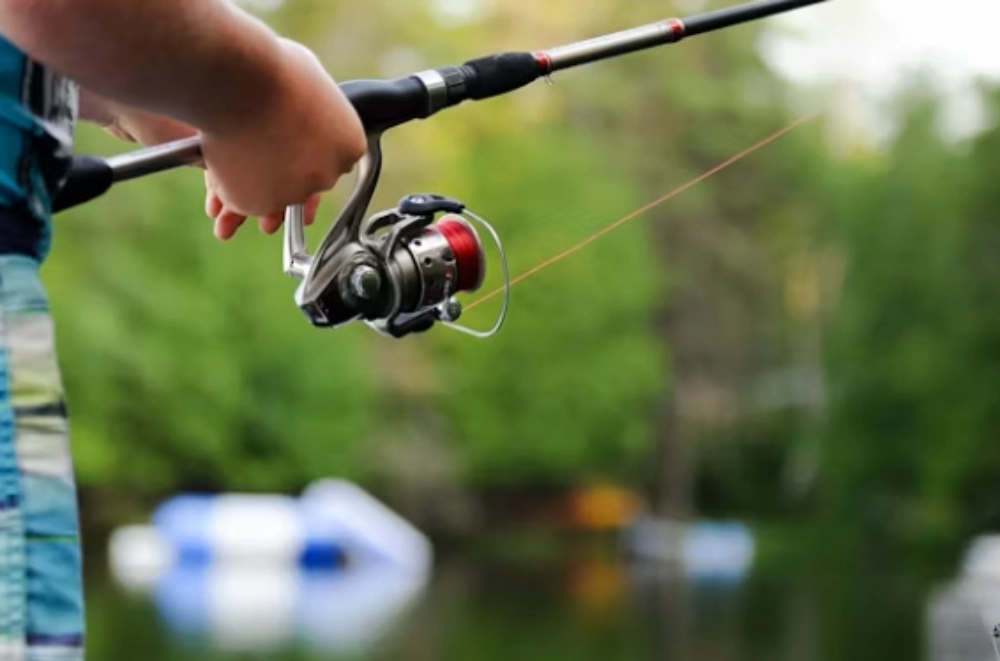
How Do Line Control Mechanics Separate a Fishing Pole from a Rod & Reel?
Evaluating a fishing pole or rod for specific fishing environments requires examining how each system manages line tension, friction, and kinetic energy during fighting sequences.
Fixed-Line Tension vs Mechanical Spool Drag Control
A basic pole relies entirely on fixed-line tension attached directly to the tip. Force management depends exclusively on blank flex and line elasticity. When a fish exceeds the line’s breaking strength, structural failure occurs. In contrast, a modern rod paired with a mechanical reel incorporates a drag system utilizing carbon washers. This system distributes force linearly, paying out line under pre-set mechanical resistance to protect thin leaders against sudden directional surges.
Line Guide Heat Dissipation and Friction Management
Line movement creates friction along contact points. Fixed poles lack line guides, causing heavy localized friction at the tip attachment. Rod setups feature ceramic line guides, such as imported FUJI guide rings, distributed along the blank. These ultra-thin ceramic inserts dissipate friction heat rapidly during high-speed line payout, preventing thermal degradation and premature line fraying under heavy loads.
Product Highlight: Fon Fishing Cork Handle Fishing Rod
For lure fishing applications requiring immediate tactile feedback and long-distance casting control, the Cork handle fishing rod combines a 40T high-modulus carbon blank with natural Mediterranean oak cork grip architecture. The high-density 40T carbon weave provides rigid sensitivity, allowing anglers to control lure landing points within a basin-sized target area. The natural cork handle withstands thermal stress up to 150°C, absorbs virtually no water, and cleans easily when exposed to mud or sand.
| Handle Component / Metric | Mediterranean Cork | Standard EVA Foam |
|---|---|---|
| Thermal Resistance | Up to 150°C | Moderate |
| Water Absorption | Near-Zero | Low to Medium (Sponge structure) |
| Dirt Cleanability | High (Simple wipe clean) | Moderate (Porous texture retains silt) |
| Sensory Transmission | Direct Blank Feedback | Dampened |
Why Does Gear Transmission Matter When Deciding on a Fishing Pole or Rod?
Mechanical torque and retrieval efficiency represent another core division when deciding on a fishing pole or rod configuration.
Precision Alloy Gears and Zero-Tooth-Feel Retrieval
Gear transmission systems transform handle rotation into mechanical line recovery. High-precision alloy drive gears and cold-forged pinion gears eliminate gear backlash under load. Internal gear meshing delivers a smooth “0-tooth-feel” retrieval, preventing mechanical chatter when cranking heavy deep-running lures or fighting pelagic game fish.
Beveled Spool Design for Extended Casting Radius
Fixed poles limit fishing distance to roughly twice the rod length. Mechanical reel spools overcome this restriction through specialized spool lip geometry. Double-angled beveled metal spools minimize line friction against the spool edge as line pays out during high-velocity casts, maximizing distance and eliminating line jamming.
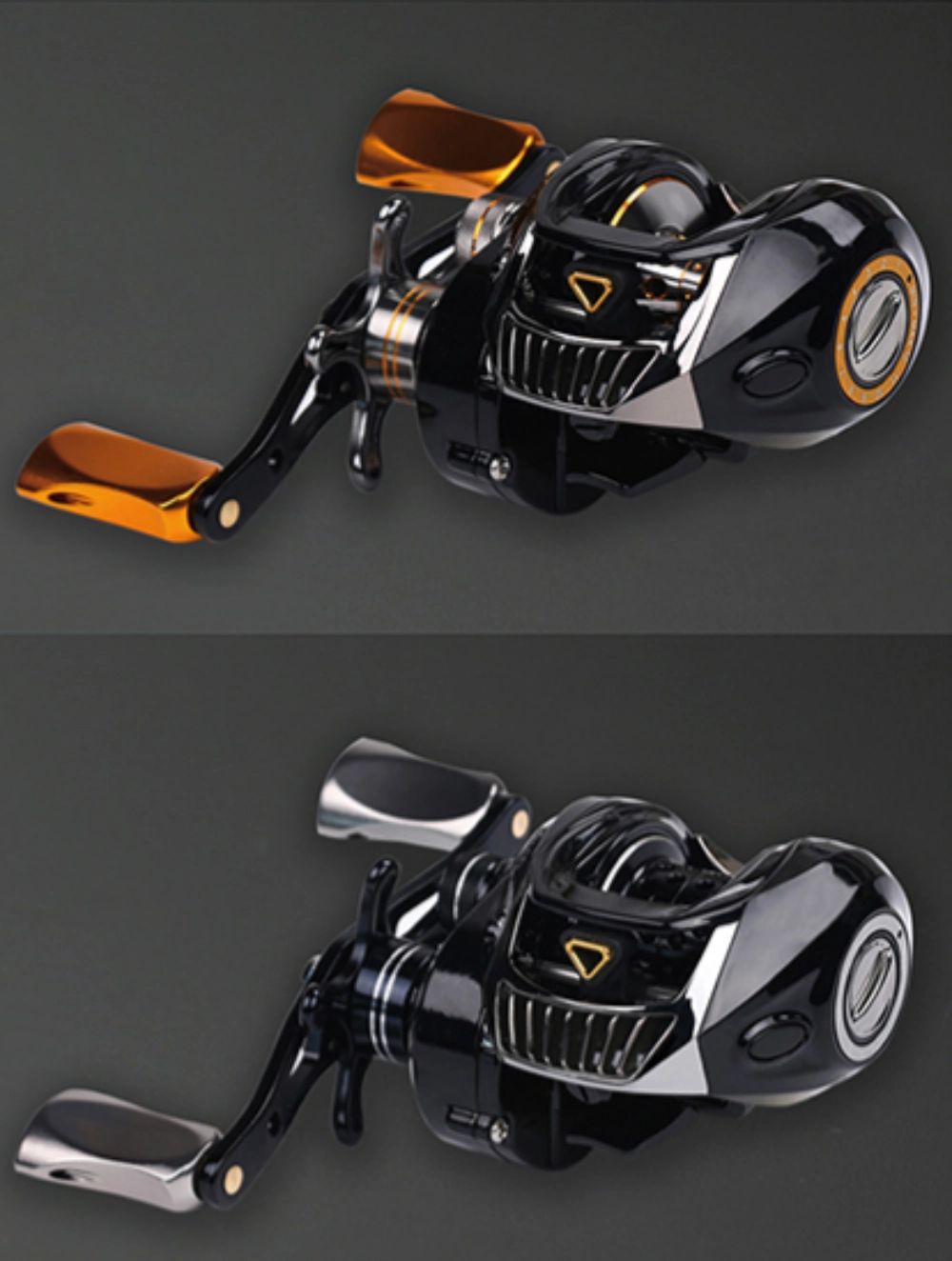
Product Highlight: Fon Fishing Flat Metal Spool Saltwater Baitcasting Reels
Engineered for high-load marine and heavy freshwater environments, Flat Metal Spool Saltwater Baitcasting Reels feature high-rigidity metal frames housing precision alloy transmission gears. The low-friction beveled metal spool supports extended casting, while the high-wear carbon brake system provides smooth drag settings for saltwater casting applications.
When Should Anglers Choose a Compact Rod Setup Over Traditional Long Poles?
Waterway structure, cover density, and seasonal temperatures influence whether a compact fishing pole or rod setup delivers superior fishing efficiency.
High-Modulus Carbon Blanks for Subtle Bite Detection
Long pole blanks can prove unwieldy in brush-covered streams or cold-water winter conditions. Compact carbon rods utilize high-modulus 30T or 40T carbon cloth, creating slender yet strong blanks. The high elasticity and rapid spring-back response transmit subtle nibbles directly to the angler’s hand, enabling fast hook-sets in challenging conditions.
Structural Compactness and Portability in Dense Cover
Navigating overgrown riverbanks or transport to icy fishing spots demands compact tackle dimensions. Retractable and multi-piece rod blank construction maintains structural rigidity while offering easy transport. The shortened blank length allows accurate short-range casting beneath low-hanging branches without risking blank impact damage.
Product Highlight: Fon Fishing Carbon Ice Fishing Rod
Designed for extreme cold-weather precision, the Carbon Ice Fishing Rod incorporates a high-tensile carbon blank with a slender, sensitive rod tip. This lightweight rod provides tactile feedback for micro-lures and subtle winter bites, while retaining the backbone required to control target species in sub-zero field environments.
How Can Commercial Retailers Optimize Inventory for Pole vs Rod Demand?
Commercial buyers must balance regional customer preferences when stocking inventory, ensuring the correct ratio of a fishing pole or rod for specific market segments.
Direct Factory Sourcing to Maximize Commercial Margins
Purchasing tackle through multi-tiered distribution channels reduces profit margins. Sourcing directly from an OEM fishing gear supplier removes intermediary distributor markups while securing direct oversight over blank tonnages, handle materials, and gear ratio specifications.
One-Stop Sourcing Across Certified Supply Chains
Managing separate vendors for rods, reels, lines, and accessories increases shipping complexity. Laike’s consolidated infrastructure—anchored by its Weihai manufacturing facility and 200+ partner factories—offers over 500 catalog items. Importers can consolidate complete seasonal tackle programs under a single purchase order.
Certified Production Oversight and Fast Fulfillment
Maintaining inventory availability requires dependable factory fulfillment. Operating with BSCI compliance and 16 consecutive years of SGS, TUV, and UPS third-party inspections, Laike provides 3-day fast shipping on stock items, flexible T/T and L/C payment terms, and a full quality guarantee offering replacement or refund for non-conforming shipments.
How to Partner with Tianjin Laike for Custom OEM/ODM Orders?
Launching proprietary tackle lines requires custom branding solutions tailored to specific regional markets and fishing methods.
Private-Label Branding via 6,000+ Existing OEM Molds
Developing custom molds requires substantial upfront capital. Laike provides access to more than 6,000 existing product molds, supported by engineering consultants in Germany and the United States. In-house graphic design teams assist with custom blank cosmetics, logo laser engraving, and retail packaging.
Flexible Commercial Terms and Dedicated Client Service
Laike accommodates diverse client scales, handling small trial orders for regional retailers alongside multi-container shipments for large chain stores. Clients receive dedicated 1V1 service throughout production, including step-by-step tracking photos covering factory assembly, quality checks, and container loading.
Direct Sourcing Contact and Catalog Requests
For technical procurement assistance, custom packaging specifications, or OEM catalog inquiries, commercial buyers and importers can contact the engineering and sales team at Fon Fishing directly to arrange sample testing and quotation reviews.
Navigating component selection, carbon blank tonnages, or reel gear ratios requires direct technical collaboration. Commercial buyers, brand owners, and retail importers seeking sample kits or private-label catalog development are invited to contact the sales team at Fon Fishing for personalized guidance when selecting a fishing pole or rod program.
FAQ
What is the main structural difference when choosing a fishing pole or rod?
A fishing pole features a fixed-line setup attached directly to the tip without line guides or a reel seat. A fishing rod includes ceramic line guides and a reel seat to accommodate a mechanical reel, enabling adjustable drag control and extended casting ranges.
Why are 40T carbon blanks and cork handles preferred in modern fishing rods?
High-modulus 40T carbon cloth provides lightweight strength and high sensitivity for precise casting. Natural cork handles offer thermal stability up to 150°C, zero water absorption, and easy cleaning from mud or sand.
When should an angler or buyer choose a compact fishing pole or rod setup for winter fishing?
Compact rods with slender carbon tips provide superior bite sensitivity in cold water and allow maneuverability in tight ice holes or brush-covered banks where long poles are difficult to manage.