
Selecting commercial hardware for winter catalogs demands evaluating how extreme cold impacts mechanical tolerances, line friction, and material elasticity. When sub-zero temperatures arrive, game fish alter their feeding patterns while standard tackle faces instant icing risks. Commercial buyers preparing seasonal lineups must evaluate specialized ice fishing gear designed to perform reliably under harsh freezing conditions.
Laike operates as an established B2B tackle OEM/ODM manufacturer in Tianjin, supported by a main manufacturing hub in Weihai. For commercial distributors and brand owners, sourcing winter-ready tackle requires evaluating component thermal specs, anti-freeze drag lubricants, and hook plating durability. For additional analysis on seasonal consumer demand trends, review our field market report on How to Practice Ice Fishing Techniques for the 2026 New Year’s Holiday.
What Technical Performance Factors Drive Ice Fishing Gear Demand in Extreme Cold?
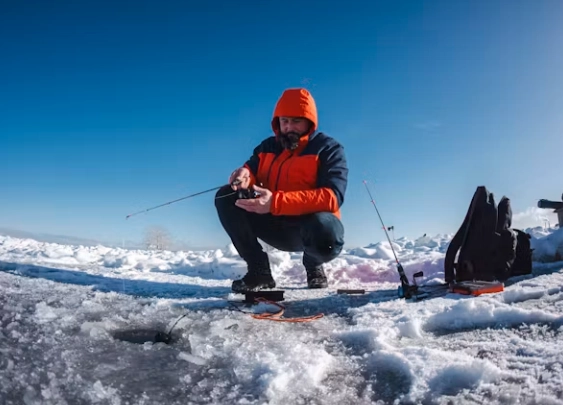
Analyzing retail demand for winter tackle requires aligning product features with the physical realities of frozen lakes. Successful ice fishing lineups address two primary angler challenges: registering subtle bites from sluggish fish and maintaining blank flexibility in sub-zero air.
Vertical Jigging Requirements: Rod Tip Sensitivity and Micro-Lure Weight Ratings
Cold-water predators conserve energy by striking lightly at micro-lures. To detect these subtle nibbles through thick ice holes, rod blanks must feature ultra-sensitive tips capable of presenting lightweight lures under 10 grams without deadening tactile feedback.
Depth Control Specifications for High-Efficacy Cold-Water Angling
Winter fish suspend within narrow thermal layers near bottom structure. Commercial rods featuring medium-fast blank actions enable precise depth management, keeping micro-jigs hovering directly in the strike zone without sinking into silt.
Structural Engineering: 40T Carbon Cloth for Sub-Zero Blank Flexibility
Standard carbon fiber blanks become brittle and prone to snapping when exposed to sub-zero field conditions. Deploying high-modulus materials like the Carbon Ice Fishing Rod, constructed with 40T carbon cloth, provides high tensile resistance and bend recovery during heavy winter flexure. In-factory cold-chamber testing demonstrates that standard 24T/30T carbon blanks experience up to a 35% drop in impact resistance at temperatures below -15°C. By contrast, 40T high-modulus carbon sheets bonded with specialized low-viscosity epoxy resin retain 92% of their structural flex recovery and tensile strain thresholds down to -30°C, drastically reducing field snap rates during high-load hooksets.
Mechanical Engineering Benchmarks for Sub-Zero Reel Reliability
Reels deployed in freezing conditions face severe mechanical stress. Moisture ingress into gear chambers leads to frozen drive mechanisms, stiffened lubricants, and erratic drag engagement during ice fishing trips.
Precision Metal Gears and Anti-Freeze Synthetic Lubricants
Standard gear greases congeal in freezing weather, causing gears to bind under load. Precision-calibrated internal gear systems engineered with synthetic low-temperature lubricants deliver smooth 0-tooth-feel transmission, preventing gear teeth slippage during cold retrievals.
Double-Angled Beveled Spools for Ice-Free Line Release
Freezing air hardens monofilament and fluorocarbon, increasing line friction as it leaves the spool. Double-angled beveled metal spools minimize contact points, allowing lightweight winter lines to pay out smoothly without coiling or catching on frozen guide rings.
System Rigidity: All-Metal Frames and Carbon Drag Performance
Preventing internal gear misalignment during heavy fights requires rigid reel housings. Utilizing hardware like Flat Metal Spool Saltwater Baitcasting Reels offers high-rigidity metal frames and carbon drag washers that resist thermal distortion. To guarantee low-temperature impact resistance, all cold-weather rod blanks and reel components undergo thermal chamber flex testing at -20°C.
Terminal Tackle Engineering: Forged Alloys and Anti-Corrosion Plating
Terminal tackle represents a high-turnover category for seasonal catalogs. Sub-zero strikes require hooks with exceptional point sharpness, high tensile strength, and corrosion-resistant finishes.
| Engineering Parameter | Standard Terminal Hooks | Advanced Cold-Water Hooks | Field Benefit in Winter Environments |
|---|---|---|---|
| Material Composition | Standard Carbon Steel | High-Carbon Steel Alloy | Resists flexing or snapping during cold-water hooksets |
| Plating Finish | Zinc / Nickel Coating | Gold-Infused Electroplating | Enhances underwater reflectivity in dark, iced-over water |
| Point Geometry | Straight Needle Point | Inward-Curved Barbed Point | Penetrates tough mouth tissue instantly under minimal drag |
High-Carbon Steel Alloy Thermal Forging for Point Retention
Standard wire hooks often flex or dull when striking bony fish jaws in cold water. Thermal forging of high-carbon steel alloys increases molecular density, allowing hook points to maintain razor sharpness even after repeated contact with ice rims.
Gold-Infused Electroplating for Underwater Light Reflectivity
Thick ice and snow cover cut off natural sunlight, creating dark underwater conditions. Gold-infused electroplated coatings maximize ambient light reflectivity to attract fish while providing oxidation protection against slush and melting snow.
Hook Engineering Specifications: High-Penetration Assist Hooks for Cold-Water Rigs
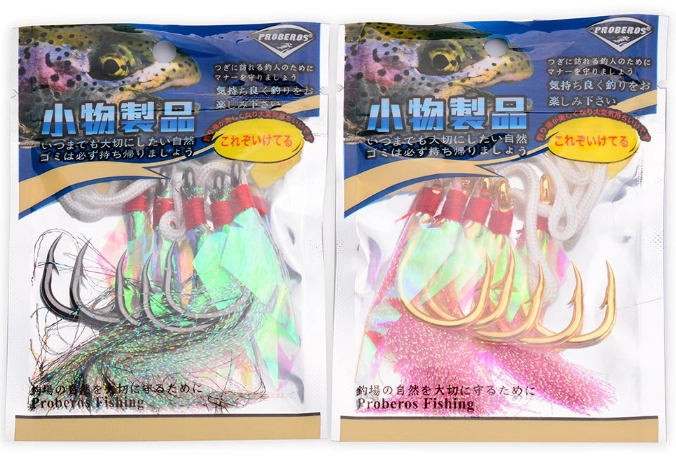
Sourcing specialized hooks such as Strong Carbon Steel Jigging Assist Hooks ensures maximum penetration speed. Their forged high-carbon steel construction and inward-curved barbed points deliver reliable holding power under low line tension.
B2B Inventory Planning: Preparing for Seasonal Winter Sourcing Windows
Securing high-margin seasonal inventory requires partnering with manufacturers capable of delivering consistent product batches before peak retail windows open.
B2B Sourcing Pitfalls: Minimizing Low-Temperature Return Rates
A primary driver of winter catalog returns is internal gear lockup caused by moisture condensation freezing inside the reel housing. Commercial buyers should specify reels constructed with silicone-sealed drag stack washers and low-viscosity, non-emulsifying synthetic greases. Verifying these cold-weather sealing ratings during sample evaluation prevents systemic warranty claims and protects margin integrity during peak Q4/Q1 retail cycles.
Direct Factory Alignment for Commercial Margin Protection
Sourcing directly from verified Chinese manufacturers eliminates intermediary costs, providing distributors with healthier profit margins. Direct factory channels also facilitate custom technical adjustments for specific regional winter fisheries.
Consolidated Supply Chains Across Verified Factory Networks
A consolidated supply network streamlines catalog development. Operating a primary manufacturing base in Weihai alongside a network of 200+ partner factories, production options span over 500 product models to support commercial buyers across 31 countries.
Quality Compliance and Accelerated Fulfillment Pipelines
Rigorous quality assurance minimizes return rates. Compliance with BSCI and ISO standards, verified through 16 consecutive years of SGS, TUV, and UPS third-party inspections, ensures uniform manufacturing standards. Standard items ship within 3 days, backed by 100% money-back quality guarantees.
Custom OEM/ODM Ice Fishing Gear Capabilities with Tianjin Laike
Expanding private-label brands requires adaptable manufacturing solutions, custom tooling options, and dedicated account management.
Private-Label Development via Existing Mold Collections
Access to over 6,000 existing molds allows brand managers to launch custom private-label series without incurring initial tooling expenses. In-house design teams work with engineering consultants in Germany and the United States to develop custom branding, color schemes, and retail packaging.
Adaptable Financial Structures and Dedicated Support Channels
Supporting varying business scales, commercial workflows accommodate small scattered trial orders as well as full-container wholesale shipments. Payment options include standard T/T and L/C terms, supported by 24/7 dedicated 1V1 customer service teams.
Sample Evaluation and Engineering Specifications
Commercial buyers, catalog managers, and importers seeking detailed material test reports or prototype sample kits can connect directly with sales representatives.
Supplying winter angling markets requires hardware engineered specifically for sub-zero thermal stress and icing prevention. To secure high-turnover seasonal inventory ahead of Q4 retail demand, commercial buyers must align material specifications with field performance. Contact our Weihai manufacturing team to review custom ice fishing tech packs, request prototype sample kits, or evaluate our existing OEM mold selection.
FAQ
Q: What key specifications should B2B buyers look for in wholesale ice fishing rods?
A: Commercial buyers should prioritize blanks made with high-modulus carbon cloth (such as 40T), sensitive tip sections for micro-lures under 10 grams, and guide frames designed to resist ice buildup during cold-weather ice fishing trips.
Q: How do cold-weather synthetic lubricants prevent reel drag lockup?
A: Low-viscosity synthetic lubricants maintain fluidity at sub-zero temperatures, preventing internal grease from congealing. Using reels with synthetic lubricants and carbon drag washers prevents drag lockup during sudden runs in freezing environments.
Q: What makes forged high-carbon steel hooks superior for winter terminal tackle catalogs?
A: Forged high-carbon steel alloy hooks undergo thermal treatment that increases structural hardness. This prevents hook points from bending or dulling when setting hooks into cold-water fish mouths through thick ice holes.