
A VIB lure that stays in the water layer where it was cast and that the angler can feel and control on the retrieve is the best one. This article attempts to tie together the factors of vibration, sinking, current, tackle and samples so that importers and serious anglers can get a handle on a model before building out a whole range of products.
Key Takeaways
A VIB lure is most effective when its vibrational action and sink rate are suited to the water’s depth and speed. Use a VIB lure for the water layer and retrieve style that you require, not just for its colors. Test a lure out near the bank before you head out, lift and fall retrieve best with line in contact with lure, increase sink count if the lure keeps hitting bottom or covering.
 Start with the water layer
VIB lures vibrate in the water as you move them around. While their sinking action makes them ideal for searching for fish below surface level, their profile can get stuck in weeds and other underwater structure. So before choosing a VIB lure, try to estimate the depth at which fish are supposed to be, the current, the type of bottom you’re fishing from and any submerged structure that may be covering your target. This will give you an idea of just how fast the lure will reach the zone where fish are striking and how much control you’ll have over it.
For open water the fish have a longer fall. For fishing in shallow water or near cover a shorter sink and a slow to medium retrieve can allow time for a reaction. However line diameter, rod angle, current and lure weight all affect the actual path of the lure and so this is only a rough guide.
Control depth consistently
For a mid-water search, increase the count time in small increments and aim to reach the target depth. If the lure consistently contacts bottom, shorten the count time or pick up sooner. If the lure seems to be sitting above structure, allow lure to fall further or decrease the retrieve speed.
Use a lift-and-fall action around structure. Make sure you lift the lure enough so it vibrates and then lower the rod slowly keeping contact with the line. A slack line will help hide a strike. On sinking lures they can settle into a snag that you wouldn’t know about otherwise. A controlled sweep of the rod on fast current will keep your lure in the strike zone longer than a sharp jerk.
Account for current and line bow
Changes in current affect line bow and lure angle. A cast to fast water will be swept down stream before it reaches the intended depth. A cast slightly up stream will give the lure more time to descend to the intended depth. However, access to water and obstructions such as weed etc. must be taken into account. A growing line bow means less direct contact and less control.
Match construction to the retrieve
Influence of line tie, body shape and construction on response and fall. Please check the specific model from the Laike VIB lure page under the family name. Weight, sink rate and species suitability are different for each model.
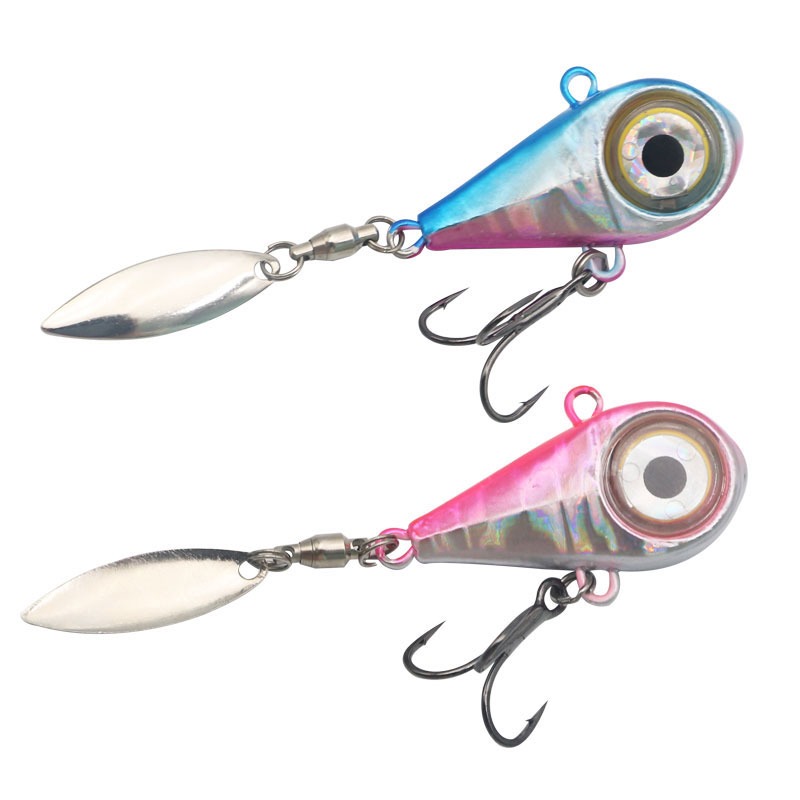
A metal body allows for fast descent in open or deep water, but a different design will produce a different type of fall. While fast sinking lures enable instant access to fish at depth, they don’t allow for time to react should the lure get snagged. Slower sinking lures can be more easily managed in shallow water with lots of cover, but may not reach deep water as quickly as faster models. Actions and catch rates must be verified with model specific evidence and not taken on trust from manufacturer’s claims.
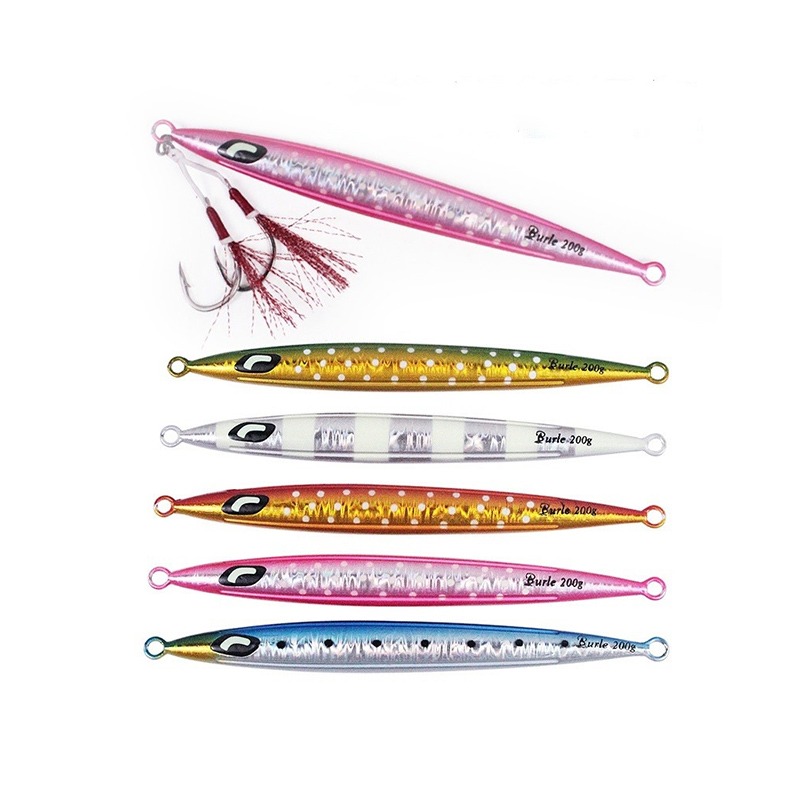
This metal jig listing is a separate product reference and should not be used for comparison with other profiles. Be sure to verify the exact product details before adding to your retail assortment.
Field checks before fishing or ordering
Test action in clear water
Test the retrieve of the lure beside the bank at various speeds. The retrieve should have consistent action and not roll on its side. If the lure fails to move at slow speeds it may be better suited for a lift-and-fall retrieve than a crawl.
Inspect the terminal setup
Repetitive casting and rubbing against rocks, trees, or shells can also wear line. Inspect the end section of line after contact with any of these items and re tie if necessary. Also, inspect hook points and split rings after clearing a snag as bent hardware can affect how they sit to ensure proper alignment and balance of tackle.
Reduce snag exposure
Identify likely weeds, rocks and timber and adjust the initial count or speed of retrieval rather than trying to pull the lure off hard lodged structure. Shorten the fall of the lure in heavily vegetated areas to prevent the lure settling into dense cover.
Buyer comparison
Request a specification sheet with dimensions, weight, material and hook details for a sample. A sample will only confirm something looks right, but in the end it has to work under all given lines and conditions.
Read the lure through its working path
What vibration actually changes
Vibration is caused by a combination of a lures body shape, line angle, retrieve speed and water resistance. A lure that feels strong at a given speed can fall apart when retrieved faster or when the line is pulled to the side by current. Action on lures should not be summed up by a single word such as aggressive. The action must be tested and a description given of how it was tested, at what retrieve speed and whether the lure in question is designed to be retrieved slowly for steady swimming or more quickly with a lift-and-fall action.
Why sink control matters
While the weight of a lure will determine its depth, other factors such as line weight, rod angle and the use of current will all affect how long it takes for a lure to reach a certain layer. It’s also important to outline the depths you wish to fish in the product brief as well as whether you’ll be fishing from shore, from a boat or fishing vertically. The same lure can be very effective in one situation and completely impossible to use in another.
Build a repeatable count-down routine
Set up a simple record for each test, including the approximate depth at which the test was made, cast direction, sink count, retrieve speed, rod angle, and bottom contact. Repeat the test with different colors or hook types after the test has produced some action, to rule out the color change having produced the results that were in fact due to a change in sink time or line angle.
Match tackle and lure as a system
Rod action and line influence feedback
A fast acting rod will transmit vibration well, but input to the rod tip will also be transmitted abruptly to cover. A more moderate setup will cushion sharp spikes in input but will not transfer information as quickly to the angler. Also, line stretch affects how quickly signal from the rod is transmitted to the lure and how ‘directly’ information from a strike is transferred to the angler’s hand. This is a system level factor and should be tested with a representative rod, reel and line as a separate factor to the lure.
Hooks and hardware are part of the action
Hardware such as hook size, split-ring weight and assist or treble configuration can affect the balance and fall of a product. When a supplier offers different options of hardware, it is wise to ask whether the photo on the website of the product is a production sample or a display sample. Retail buyers must list the hook and ring configuration on the purchase order and compare this with the production sample when it arrives.
Saltwater and freshwater checks differ
Inspection questions for saltwater lures focus on the hardware that is exposed to the harsher saltwater environment and on storage. For freshwater lures inspection questions focus on hook alignment for possible snagging, on possible snagging of lures with exposed surfaces and on the retrieve range within which the lure remains stable.
Use a structured supplier conversation
Questions for the product sheet
Request model code, body material, dimensions, weight, hook configuration, colors available, packaging units and approved product images. Determine which of the information above is fixed for an order and which changes from batch to batch. If sink rate or target species information is not provided then omit from public copy and ask for clarification.
Questions for sample approval
Test the visible finish, the eyelets, hook points, split rings and the movement at 2-3 retrieve speeds for a sample that is a close match to the item code and artwork that you plan to order. It is far more useful than a product page sample approval if the buyer sets out the acceptance criteria rather than relying on the buyer to form a general impression.
Questions for assortment planning
Map each SKU to a defined condition: shallow cover, open mid-water, deeper water, current, or a particular retail customer segment. This creates a reason for every item in the assortment and helps sales staff explain the difference. It also limits over-ordering of near-identical colors that do not add a clear use case.
FAQ
Can a VIB be retrieved steadily?
This model should be able to hold action well at the speed at which you’re running it. Test it in clear water and run it at the appropriate speed to get the depth you’re after.
Is a VIB suitable around weeds?
This setup will work in sparse cover situations, but the exposed hooks and sinking body present a number of snagging situations. Reduce the number of sinks and keep the lure in contact with the water until it hits bottom.
What should an importer verify?
Get confirmation for the model, material, dimensions, weight, hooks, packaging and color assortment by writing to Laike. Communicate your needs with reference to the target conditions and assortment.
Select for control, then validate
Check the sinking profiles against the depth and current you are fishing in, test action at a range of speeds and confirm the precise configuration before launching a range. Review the Laike fishing tackle range and list the conditions each of the lures can be used on.