
For a retailer buying Fishing Line Wholesale, the package is part of the product specification. Diameter, breaking strength, length, material and intended use need to be easy to find and consistent with the line on the spool. If the label is vague, a sales assistant cannot explain the product clearly and a buyer cannot compare one supplier’s offer with another.
Laike supplies fishing tackle for different fishing methods and wholesale programs. Its line range includes Strong Nylon String Fishing Line and Fly Fishing Line. Those products serve different customer needs, so the packaging should make the distinction visible without filling the front panel with claims that the line cannot support.

Which Specifications Must Be Easy to Find on the Pack?
The front and back panels do not need to say everything, but they should answer the first questions a buyer asks. Put material, diameter, strength, length and use information in a consistent order.
Material and Line Construction
State whether the line is nylon monofilament, fly line or another construction. Nylon monofilament is made by melting the material at high temperature, forming it through a die and stretching it through several rollers to set the line. That process matters because the material and forming method affect how the finished line is classified and handled.
Do not use “nylon” as the whole product explanation. The package should connect the material to the line type and the intended use. A nylon fishing line packaging checklist should also leave room for the model code and batch reference. Use the same nylon fishing line packaging checklist for proof approval.
Diameter and Breaking-Strength Class
Diameter and tension or breaking strength are core classification fields for nylon fishing line. Print the diameter with a clear unit and show the strength using one agreed system. If more than one unit appears, make the conversion easy to understand and avoid placing competing values at the same visual level.
Buyers should compare the printed value with a physical sample and the internal product record. A line can have a small diameter but still need a different use description from a thicker line. Packaging should help the customer choose rather than imply that one field predicts every aspect of performance.
Spool Length and Intended Fishing Use
Length is another core field. State how much line is on the spool, then identify the fishing situation or technique it is intended to support. Nylon has a specific gravity of about 1.14, which can be relevant when a buyer considers how the line sits in the water, but it should not replace a clear application description.
Use a readable hierarchy: material first, then diameter and strength, then length and use. This lets a shop worker answer “What size is it?” without opening the package. It also helps a Fishing Line Wholesale buyer compare spools across a shelf.
How Should Buyers Check Whether the Label Matches Performance?
Packaging review should be connected to a sample review. The label is a promise about identification, while the spool shows whether the product information is stable in practice.
Compare Printed Diameter With Sample Measurement
Check the printed diameter against a sample using an agreed measurement method. Diameter is a key classification field, but a buyer should record how the result was obtained and whether the same method is used across samples.
Review several points on the line rather than relying on one cut section. Look for obvious variation in the spool and keep the model code with the measurement record. Buyers can also review how fishing line specifications affect durability and performance when deciding which checks belong in a wholesale approval process.
Test Straight Pull and Knot Behavior Separately
Tension or breaking strength is a central label field, but a straight-pull result does not answer every knot question. Review the line under the test condition used by the buyer, then separately observe how the line behaves when tied and handled. This is a key Fishing Line Wholesale check before a label is approved.
Do not turn one result into a universal promise. The useful packaging decision is to state the test field clearly, identify the line and keep the sales description within that field. This protects the buyer from comparing unrelated numbers as if they were identical tests.
Check Spool Length and Line Consistency Across Samples
Length should match the package marking and the approved product record. Check the beginning, middle or end of the spool when the inspection method allows it, and record any reason the measured result may differ from the marked quantity.
Consistency also includes the way the line sits on the spool, the clarity of the model code and the relationship between the outer label and the inner product. A repeat order should not require a new interpretation of the same packaging.
What Packaging Details Protect Retail Clarity and Product Condition?
A good label makes the product easy to select, while good physical protection keeps the line in saleable condition. Both are part of the buying decision.
Use One Unit System Consistently
Choose a primary unit system for diameter, strength and length. If the target market needs a second unit, show it in a controlled conversion line. Avoid switching between units on different panels or using a number without a unit.
The rule is simple: a customer should not have to guess whether a number refers to diameter, length or strength. This is a basic fishing line label verification point, but it prevents avoidable shelf and order errors. Repeat the fishing line label verification before a packaging reprint.
Make Material, Size and Application Visually Distinct
Separate material, diameter, strength, spool length and application in the information hierarchy. A technique-specific fly line should not be presented as if it were the same product as general-purpose nylon line. Use the model name and product code to make the distinction durable across cartons and individual spools.
Keep marketing wording subordinate to the specification. A short, accurate use description helps more than a large adjective that cannot be checked by the buyer or user.
Protect the Spool and Preserve Lot Traceability
The packaging should protect the spool from crushing, contamination and label loss. Keep the model and lot reference readable after transport and shelf handling. When several line types look similar, the outer carton should repeat enough information for a warehouse worker to separate them correctly.
Traceability also supports a correction. If a label needs revision, the buyer can identify which lot and package version were affected instead of treating every spool as the same.
How Should Laike’s Two Line Types Be Positioned?
The package should make the difference between general nylon line and technique-specific fly line clear. Product roles should be based on use and specification, not only on the size of the spool.
Strong Nylon String Fishing Line for General-Purpose and Heavier Use
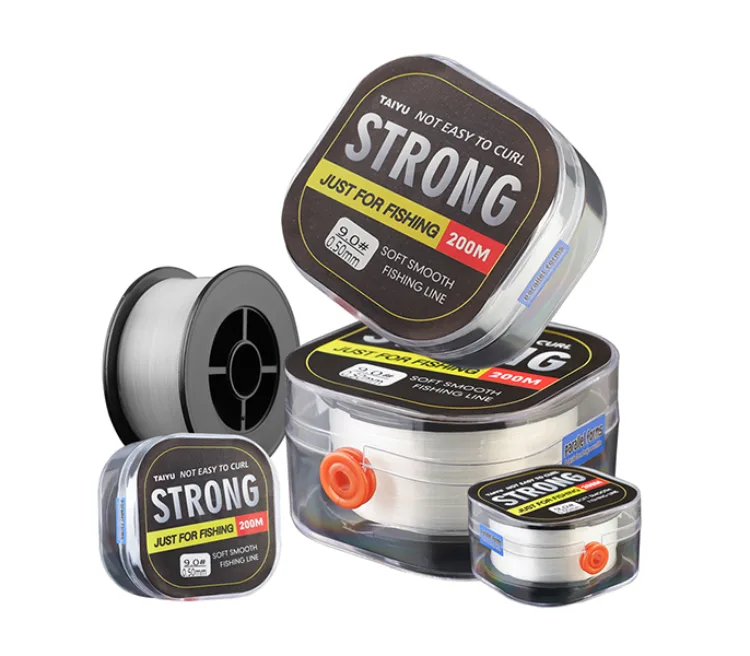
Strong Nylon String Fishing Line can serve a general-purpose or heavier-use shelf position. Buyers should confirm its diameter, tension, length, material description and target fishing situations before finalizing the front-panel hierarchy.
Nylon line can be discussed through its material behavior and the fields that help a buyer compare it. Keep the package focused on the actual model rather than making one broad claim for every nylon spool.
Fly Fishing Line for a Technique-Specific Segment
Fly Fishing Line belongs in a technique-specific segment. Its packaging should make the line type and intended fly-fishing use immediately visible, then present the model and specification information in a consistent order.
This separation helps the retailer build a clear shelf and reduces the chance that a customer picks a line based only on diameter while overlooking the fishing method. It also makes the Fishing Line Wholesale range easier to reorder.
Keep Product Naming and Specification Hierarchy Consistent
Use one naming structure across the product range: product type, model, diameter, strength, length and intended use. Keep the same order on the spool, individual package and outer carton where possible.
Consistency helps a buyer reorder, a warehouse worker pick the correct carton and a customer compare two models. It also makes future packaging updates easier because the information has a defined place.
A reliable Fishing Line Wholesale packaging process checks the line construction, diameter, strength, length, application, unit system, physical protection and lot identification together. The goal is a package that answers a real buying question in a few seconds and remains traceable after shipment.
Contact Laike About Fishing Line Packaging
Share the Target Market and Unit System
State the sales market, required units, line types, customer segments and packaging levels. Explain whether the product will be sold as individual spools, retail sets or cartons.
Request Line Samples and Packaging Proofs
Request physical line samples, spool samples and a packaging proof showing material, diameter, strength, length, use and model code. Check the outer carton against the individual label.
Submit the Packaging Brief Through the Laike Contact Page
Buyers can send the brief through the Laike contact page. Include the specification hierarchy and inspection method so the packaging review addresses both retail clarity and product control.
FAQ
What Information Should Fishing Line Packaging Show?
A Fishing Line Wholesale package should show material or construction, diameter, tension or breaking strength, spool length, intended fishing use, model code and lot information. Use clear units and keep the hierarchy consistent across the spool and carton.
Are Diameter and LB Test Enough for Fishing Line Wholesale Buyers?
No. Diameter and breaking strength are important, but buyers should also check material, line construction, spool length, intended technique, unit system, package protection and lot traceability. Straight-pull information does not replace a separate review of knot behavior.
How Can Buyers Check Whether Fishing Line Labels Are Consistent?
Compare the label with physical samples and the product record. Check diameter, strength, length, material, model code and lot information, and use the same measurement method across samples. Review the individual spool and outer carton together before approving a repeat order. A Fishing Line Wholesale buyer should retain that comparison with the packaging proof.