
Determining expected service life under commercial or fleet conditions requires analyzing mechanical stress rather than casual calendar years. While standard recreational gear may last 5 to 10 years with occasional use, high-frequency commercial operations reduce average service life to 2 to 4 years. Evaluating fishing rod durability depends on analyzing how repetitive flex cycles, guide ring heat, and environmental exposure alter blank structural integrity over thousands of casts.
Laike operates as an established B2B tackle OEM/ODM manufacturer in Tianjin, integrated with a primary manufacturing base in Weihai. Utilizing a consolidated supply network of more than 200 partner factories, the enterprise supplies blanks, reels, and terminal hardware to commercial distributors across 31 countries. For a foundational analysis of operational wear, review our initial study on How Long Do Fishing Rods Last under Professional Use Conditions.
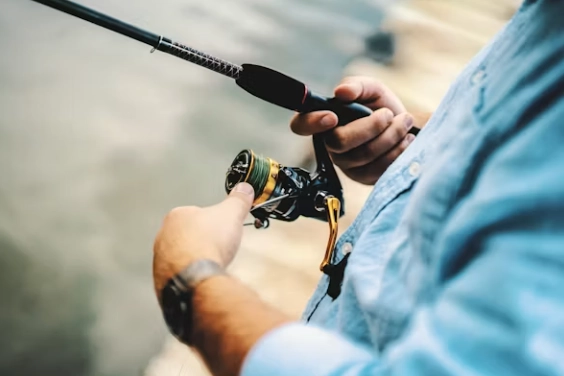
What Factors Accelerate Fishing Rod Degradation in Commercial Operations?
Daily charter trips and tournament angling expose rod blanks to continuous mechanical fatigue that rarely occurs during casual weekend trips. Primary factors influencing fishing rod durability include resin matrix breakdown and guide ring abrasion.
Micro-Fracture Accumulation in Carbon Blanks Under Heavy Loads
Continuous bending under heavy lure weights causes microscopic shear stress between carbon fiber filaments. Over time, the resin binder holding carbon sheets together develops micro-fractures. Laboratory fatigue testing reveals that standard carbon blanks subject to continuous 45-degree flex cycles show resin matrix micro-fracturing after approximately 15,000 to 20,000 cycles. Utilizing high-density 40T carbon fiber layups bound with toughened resin extends this structural endurance threshold to over 45,000 cycles before measurable decline in tip recovery speed occurs. Sourcing specialized blanks like the Carbon Ice Fishing Rod demonstrates how advanced carbon layups preserve structural integrity even under severe thermal strain and maximum tip bend angles.
Guide Ring Friction and Thermal Damage from Braided Lines
Braided lines carry abrasive salt crystals and fine debris through guide rings under high drag tension. Low-grade ceramic inserts develop microscopic surface grooves. These burrs generate friction heat, stripping line coatings and concentrating bending torque onto narrow sections of the blank.
Expected Lifespan Breakdown by Material and Hardware Components
Material selection directly influences how blanks handle environmental wear, impact forces, and mechanical decay over multi-year commercial deployment. Component composition directly impacts fishing rod durability under continuous outdoor exposure.
Carbon Fiber vs. Composite Blank Fatigue Thresholds
High-tonnage carbon fiber blanks deliver rapid energy transfer and crisp recovery, but require precise load distribution. Composite blanks containing fiberglass offer higher impact resistance against boat gunwale strikes, though at the cost of additional weight. Determining how long do carbon fishing rods last depends heavily on carbon lay-up density and resin binder quality.
Handle Material Stability: Grade-A Natural Cork vs. EVA Foam
EVA foam handles often compress, absorb fish oils, and harden after repeated sun exposure. Specifying Grade-A natural cork grips provides thermal stability up to 150°C while resisting moisture absorption and sweat-induced chemical decay during prolonged exposure. Incorporating handles such as those on the Cork handle fishing rod ensures long-term ergonomic traction for charter crews operating under extreme weather conditions.
| Component / Material | Common Failure Mechanism | Expected Commercial Lifespan | Primary Prevention Protocol |
|---|---|---|---|
| High-Modulus Carbon Blank | Resin matrix micro-fracturing | 2 – 4 Years | Avoid over-sticking and high-sticking past rated drag limits |
| Ceramic Guide Inserts | Surface grooving from braided line | 1 – 3 Years | Inspect rings with cotton swabs for microscopic burrs |
| Grade-A Natural Cork | Surface pitting and oil absorption | 5+ Years | Perform regular freshwater washdowns to remove salt residue |
System Synergy: How Reel and Drag Alignment Protect Blank Integrity
A rod does not operate in isolation; unbalanced reel seats or erratic drag engagement transfer destructive side-loads directly into the blank. Maintaining fishing rod durability during heavy retrievals requires system-wide alignment.
Torsional Stress Reduction via All-Metal Reel Frames
When a reel frame flexes under heavy drag pressure, it creates torsional alignment errors at the reel seat hood. This twisting force unevenly stresses the blank axis under heavy load, accelerating blank fracture risks during intense retrievals. Pairing high-strain blanks with all-metal reel bodies eliminates frame flex under maximum drag settings. Deploying hardware like Flat Metal Spool Saltwater Baitcasting Reels preserves gear alignment and protects connected carbon blanks from destructive torsional spikes.
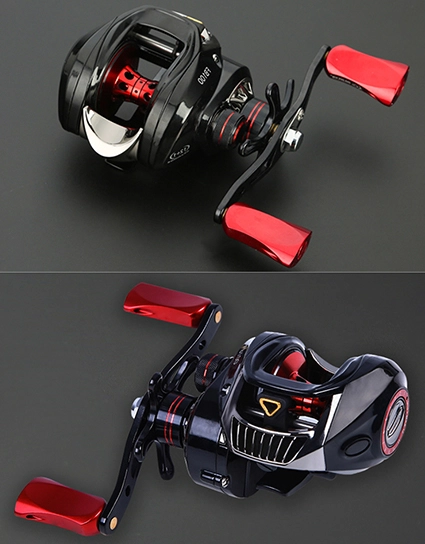
Absorbing Shock Loads with Smooth Carbon Drag Systems
Jerky drag washers cause sudden strain spikes on the blank tip. Precision-calibrated internal gears providing 0-tooth-feel transmission, combined with linear carbon drag systems, absorb sudden fish surges and mitigate shock forces transmitted along the rod shaft.
Commercial Protocols for Extending Gear Lifespan and Sourcing Replacements
Extending professional fishing rod lifespan and securing consistent inventory requires combining daily operational care protocols with stable B2B supply channels. Verifying fishing rod durability across incoming shipments protects commercial brand reputation.
Commercial Maintenance Protocol: The 2-Step Inspection Standard
To prevent catastrophic blank failure during charter client operations, fleet mechanics should perform weekly guide checks using fine cotton balls; micro-burrs as small as 0.05mm caught on cotton threads indicate ceramic ring degradation that will slice braided lines under 20lb+ drag tension. Replacing a $3 guide ring proactively preserves a $150+ commercial rod blank.
Direct Factory Alignment and One-Stop Supply Networks
Procuring directly from verified manufacturing facilities ensures strict oversight over resin-to-carbon ratios while eliminating middleman markups. Supported by a main production hub in Weihai and 200+ partner manufacturing sites, catalog lines encompass over 500 product models to support commercial buyers across 31 countries.
Quality Oversight and Accelerated Fulfillment Pipelines
Quality control protocols reduce field failure rates. Adherence to BSCI and ISO standards, verified through 16 consecutive years of SGS, TUV, and UPS third-party audits, guarantees manufacturing compliance. Standard catalog items feature 3-day fast shipping options backed by 100% money-back quality guarantees.
How to Partner with Tianjin Laike for High-Durability OEM/ODM Orders?
Customizing tackle to specific commercial fisheries requires flexible OEM capabilities and technical engineering support. Maximizing fishing rod durability for private-label lines depends on selecting verified manufacturing molds and structural tapers.
Private-Label Customization via 6,000+ Existing Molds
Access to over 6,000 existing molds allows brands to launch private-label rod series without upfront tooling costs. In-house design teams work alongside engineering consultants in Germany and the United States to optimize blank taper and guide placement for target species.
Flexible Commercial Terms and 24/7 Dedicated Client Support
Accommodating varied order volumes, commercial options support small scattered trial batches as well as full-container wholesale shipments. Payment workflows include T/T and L/C structures, supported by 24/7 dedicated 1V1 account managers.
Direct Sourcing Contact and Catalog Requests
Commercial buyers, fleet managers, and retail chain buyers seeking custom OEM specifications or physical test samples can connect directly with factory representatives.
Optimizing fleet service life begins with selecting the correct carbon layups and component ratings. Contact our engineering department in Weihai to request full material test reports or order custom evaluation samples.
FAQ
Q: How long do carbon fishing rods last under heavy commercial use?
A: Under continuous daily charter or professional tournament conditions, high-modulus carbon rods typically offer an operational service life of 2 to 4 years before resin matrix fatigue noticeably affects blank recovery crispness.
Q: What maintenance routine helps extend saltwater fishing rod durability?
A: Performing regular saltwater fishing rod maintenance by rinsing rod blanks, reel seats, and guide frames with fresh warm water after every trip prevents salt crystal accumulation. Freshwater washing preserves protective epoxy coatings and maintains overall fishing rod durability.
Q: Why do ceramic guide inserts crack or chip on heavy-duty rods?
A: Ceramic inserts usually crack from accidental impacts against boat gunwales or from heat buildup caused by pinched braided line under high drag loads. Partnering with a reliable commercial fishing tackle supplier ensures access to replacement guide sets and high-grade ceramic ring options.