
Surf fishing puts a reel close to salt spray, breaking waves, windblown sand, and wet equipment bags. Once moisture or grit reaches the spool, line roller, handle joint, or drag area, continuing to crank may pull contamination farther inside. A Clean Fishing Reel routine should therefore begin before the reel feels rough or starts making noise.
The first goal is not a complete teardown. It is to remove surface salt and loose sand without forcing either material into bearings or gears. After that, the reel must dry fully before lubrication, storage, or further testing.
Laike supplies fishing reels, rods, lines, lures, and related tackle for freshwater and saltwater use. Its reel range includes spinning, baitcasting, and trolling models for different casting methods and target fish. This matters in maintenance because a fixed-spool spinning reel, a baitcasting reel, and an offshore trolling reel do not expose the same components to sand and water. The cleaning process should match the reel structure rather than follow one general procedure for every model.
What Should You Do Immediately After the Reel Gets Wet or Sandy?
A Clean Fishing Reel starts with damage control. The first few actions determine whether sand stays on the surface or moves into the transmission system. Do not repeatedly turn the handle to “check” the reel while visible grit is still present.
Stop Cranking and Remove the Reel from the Rod
Don’t try to continue using the reel once it has become lodged in sand, been hit directly by a wave, or become overly covered in saltwater spray. In all of these instances, turning the handle of the reel can drive particles into the reel such as under the spool, into the line roller, or down inside the main shaft of the reel.
Move your gear away from the surf and first remove the reel from the rod to allow water to drain from the space between the reel seat and the reel itself. If possible, remove the spool from the reel, taking care not to disturb the internal gear case. Lay the spool on a towel to dry.
Do not place wet components directly on the beach, a boat deck covered with grit, or an unclean workbench. A shallow tray helps keep washers, caps, and other removable parts together.
Rinse Salt and Lift Away Loose Sand
Use a gentle stream of clean freshwater. High-pressure spraying is not helpful because it may push salt and grit through small openings. Hold the reel upright and let water move over the outer housing, spool lip, bail arm, handle, and reel foot.
For anyone researching how to clean a fishing reel after saltwater use, the main rule is simple: remove salt before it dries, but do not soak the complete reel. Salt crystals left around screws, joints, and spool edges can hold moisture and gradually affect movement.
Loose sand should be lifted away rather than scrubbed across coated surfaces. A soft brush or clean cloth can remove particles after the initial rinse. Do not use compressed air at close range because it can drive sand deeper into the body.
Dry Before Testing Movement
Pat the reel dry with a lint-free cloth. Leave the spool and reel body in a ventilated, shaded place. Strong direct heat can affect plastic parts, line, lubricants, or seals.
Do not reinstall the spool or close the equipment inside a tackle box while moisture remains around the main shaft or drag knob. After the exterior has dried, rotate the handle slowly. Stop if you feel grinding, irregular resistance, or a repeated rough point.
How Should You Clean the Reel Without Pushing Grit Inside?
The Clean Fishing Reel process should move from exposed surfaces toward more protected parts. Most anglers can complete external cleaning safely. Internal gear servicing requires more care, especially when the reel contains small springs, washers, bearings, or a multi-part drag stack.
External Cleaning for the Spool, Bail, and Line Roller
On a spinning reel, inspect the spool lip first. Sand on this edge can rub against the fishing line during casting. Wipe around the lip, the underside of the spool, and the exposed main shaft.
Next, check the bail arm and line roller. The roller must turn freely because a seized or dirty roller increases friction and may twist or wear the line. Use a damp cotton swab to remove residue around the roller housing. Avoid flooding the area with oil.
The Big Game Spinning Fishing Reels are offered in sizes from 1000 to 7000 and use aluminum, copper, and nylon components with corrosion-resistant surface treatment. The range also uses interchangeable handles and a large drag adjustment knob. These exposed areas should be included in every after-trip inspection, particularly after surf, rock, or sea fishing.
For a retailer or fishing operator, a broad size range can simplify product matching. Smaller sizes suit lighter setups, while larger reels provide a different balance for open-water or heavier applications. Maintenance instructions should still be supplied by reel type and size rather than presented as one universal procedure.
Controlled Cleaning for a Baitcasting Spool
Learning how to remove sand from a fishing reel is especially important with baitcasting models. Their spool, level-wind guide, and cast-control areas are closely linked to line output. A small amount of sand can change spool movement or create an uneven retrieve.
Remove only the parts covered by the product instructions. Brush loose particles away from the spool shaft, frame opening, and line guide. Check the spool edge for trapped grit before reinstalling it. Do not grease the spool surface or apply heavy lubricant to the line guide.
The Flat Metal Spool Saltwater Baitcasting Reels use a flat metal spool, a high-strength metal alloy frame, a 7.1:1 gear ratio, 12+1 ball bearings, and a 6 kg drag rating. Their casting-control and level-wind areas require careful cleaning because sand in these moving points may affect accurate line release even when the outer frame looks clean.
Safe Drying and Light Lubrication
Lubrication should follow cleaning and drying, not replace them. Oil placed over salt or grit creates a paste that holds contamination against moving parts.
For fishing reel lubrication after cleaning, use reel-specific oil or grease and follow the product manual. Light oil normally suits exposed pivots and designated bearings, while grease is generally reserved for gears and other specified internal contact surfaces. More lubricant is not automatically better.
Wipe away visible excess. Oil should not run onto the fishing line, drag washers, spool braking surfaces, or handle grips. If you are unsure which points are designed for lubrication, stop at external cleaning and request service guidance.
Which Damage Signs Mean the Reel Needs Deeper Service?
A Clean Fishing Reel can still require service if saltwater or sand reached protected parts before cleaning began. The condition of the reel after drying is more useful than its outer appearance. Test each function slowly and compare it with how the reel operated before the incident.
Rough Rotation and New Mechanical Noise
A gritty feel that repeats with every handle turn may indicate contamination in a bearing, gear contact area, or shaft support. Clicking, scraping, or sudden tight spots should not be treated by adding more oil from the outside.
Do not force the handle. Continued operation can move abrasive particles across gear teeth or bearing surfaces. This is one of the clearest signs a fishing reel needs service.
Uneven Drag or Delayed Line Release
Test the drag with the reel mounted securely and the line under light, controlled tension. The drag should release progressively rather than sticking and then jumping.
If water entered the drag stack, the washers may not behave consistently. A drag that slips too easily, locks unexpectedly, or changes pressure during the test should be inspected before the reel is used against a strong fish.
The drag system is not only a comfort feature. It limits sudden load on the line, hook, rod, and reel. Reassembling drag washers in the wrong order or adding unsuitable lubricant can change that function.
Corrosion Around Screws, Spool Edges, and Handles
Look for white residue, discoloration, bubbling around a finish, or rust near screws and handle joints. Early corrosion is easier to address than damage that has already affected threads or internal alignment.
Regular saltwater fishing reel maintenance should include checking places where different materials meet. Moisture often remains around fasteners, side plates, spool shafts, and reel feet after the larger surfaces appear dry.
B2B Tackle Fleet Maintenance Sign-Off Checklist
A Clean Fishing Reel should not return to rental service, demonstration use, retail testing, or customer delivery based only on its external appearance. Distributors and operators can use the following internal acceptance procedure to make maintenance decisions more consistent:
- Cleaning record: Confirm a 15–20-second low-pressure freshwater rinse, with no immersion and no high-pressure spraying.
- Rotation test: Turn the handle slowly for 10 complete rotations, followed by 10 moderate-speed rotations. Quarantine the reel if it produces grinding, repeated tight points, scraping, or new mechanical noise.
- Spool and line-control test: Inspect the complete spool lip, line roller, level-wind guide, and exposed shaft. No visible sand, dried salt, or restricted roller movement should remain.
- Drag test: Make three controlled line pulls at progressively higher drag settings. The drag should start smoothly each time without sticking, sudden release, or a noticeable change between pulls.
- Corrosion inspection: Check the reel foot, screws, spool edge, handle joint, drag control, and side-plate seams. The release standard is zero visible salt crystals, rust, or trapped moisture.
- Final status: Mark each unit as pass, service required, or parts inspection required. A reel passes only when every checkpoint and the operator’s name are recorded.
These figures work as an internal fleet-control method rather than universal product specifications. Any reel that was submerged, remains noisy, or produces irregular drag after cleaning should be removed from use until its internal condition is checked. Official maintenance guidance also recommends loosening the drag during drying and storage after cleaning.
Which Reel Type Fits Wet and Sandy Fishing Conditions?
Reel selection affects both field performance and maintenance workload. A buyer should consider where the reel will be used, which areas are exposed, how easily the spool can be inspected, and whether users can obtain clear service instructions. A Clean Fishing Reel is easier to maintain when its structure matches the fishing method.
| Reel Type | Suitable Use | Main Cleaning Focus | Selection Consideration |
|---|---|---|---|
| Spinning reel | Surf, rock, shore, freshwater, and general casting | Spool lip, bail arm, line roller, main shaft | Straightforward external access and broad size matching |
| Baitcasting reel | Controlled casting and faster line pickup | Spool shaft, level wind, frame openings, cast control | Requires careful grit removal around close-moving parts |
| Trolling reel | Boat-based saltwater fishing and steady line control | Handle, spool edges, drag controls, side plates | Focus on spray exposure, line capacity, and steady drag behavior |
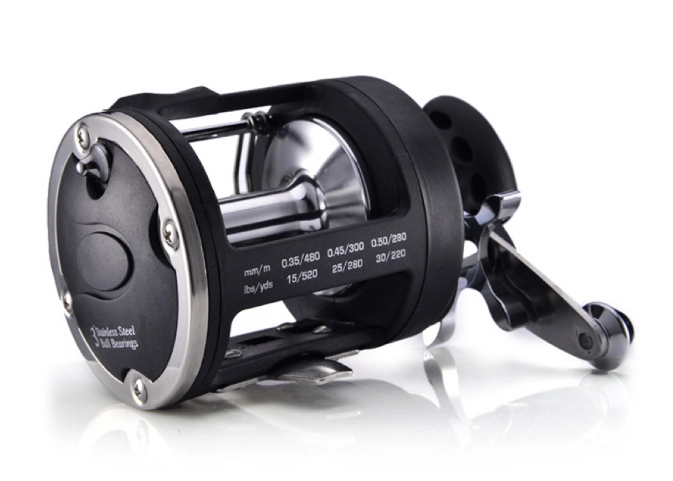
For boat trolling rather than surf casting, the Tolling Fishing Reel uses a stainless-steel reel body and is available in TSSD3000 and TSSSD4000 versions. Its 3.8:1 gear ratio is designed around steady retrieval rather than high-speed casting. This makes it a different procurement category from spinning or baitcasting reels, even though all three require freshwater cleaning after saltwater exposure.
Also consider the instructions that are supplied with your products. Many maintenance complaints arise due to incorrect cleaning, wrong lubrication, missing assembly instructions or products being sold for use in harsher environments than the design of the product can withstand. Providing correct maintenance documentation can help avoid returns due to avoidable reasons and also inform end users when products require servicing by experts.
Rinse reel gently after being in salt water, wipe off sand before turning handle, dry reel completely, inspect reel for movement, and lubricate only approved points. A Clean Fishing Reel should spin smoothly, open up smoothly to release line, and not introduce any new noise or drag to the line before storing the reel.
For reel specifications, maintenance documentation, model matching, OEM requirements, or packaging instructions for retail programs, buyers can contact the Laike team with the intended fishing environment, reel type, target user, line setup, and order needs. These details help the supplier recommend a more suitable configuration and provide the service information required by distributors and end users.
FAQ
Q: Does a Clean Fishing Reel Need Lubrication After Every Saltwater Trip?
A: Not every reel needs full lubrication after each trip. Rinse the exterior gently, dry it completely, and inspect movement first. Apply light reel oil only to approved external points when needed. Internal gears and drag components should not be opened after every outing unless the manual requires it or the reel shows a problem.
Q: Can I Keep Using a Reel After It Falls into Sand?
A: Do not turn the handle while sand is visible. Remove the reel from the rod, rinse loose grit with low-pressure freshwater, take off the spool if the design allows, and let all parts dry. If the handle still feels rough or makes noise, arrange deeper service before using it again.
Q: Should I Soak a Fishing Reel to Remove Salt?
A: No. Soaking may allow water and dissolved salt to enter the gear case, bearings, or drag system. Use a gentle freshwater rinse on the exterior, wipe accessible surfaces, and dry the reel in a ventilated area. A controlled rinse is safer than complete immersion.