
Learning to Surf Fish is not mainly about casting as far as possible. It starts with reading the beach, choosing a balanced setup, and fishing when moving water carries food through useful lanes. Beginners need clear answers on where to cast, what tackle to bring, which rig to use, and how to protect gear from salt and sand.
Laike supplies rods, reels, lures, lines, hooks, tools, and storage products for anglers and trade buyers. Its range can support a beginner surf fishing setup built around one use rather than unrelated parts. The key is to match rod rating, reel capacity, line, and terminal weight. Laike also supports OEM product, logo, and packaging work for retailers and distributors.
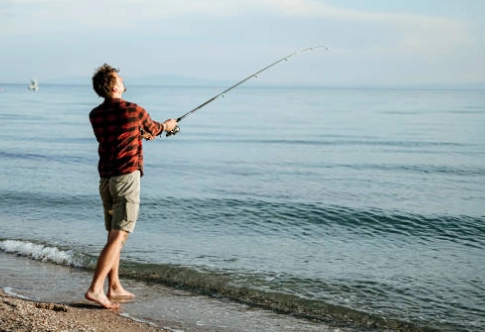
Where Should Beginners Cast When They Surf Fish?
A beach bottom changes constantly. Fish often travel along depth changes where current moves crabs, shrimp, and baitfish. Before changing bait, check whether your rig is reaching one of those lanes.
Sandbars, Troughs, Cuts, and Current Seams
Waves often break first over shallow sandbars. The darker water between a bar and the beach may be a trough, while a gap in the breaking waves can show a cut or current lane. Cast beside these changes, not only into open water.
Never assume a calm gap is safe for wading because it may mark a rip current flowing away from shore. Use the water pattern as a casting reference while keeping secure footing.
Low-Tide Scouting Before the Session
Walk the beach at lower tide and note slopes, shell beds, channels, rocks, and bar edges that may disappear later. This is the practical side of how to read the beach for fishing. Mark a safe return route as well because rising water can cut off access near points and steep banks.
Casting to Structure Instead of Maximum Distance
Test three zones: the first trough, the edge of the outer bar, and beyond the breakers when the setup allows. Give each zone several casts before moving.
Fish may feed close to shore, so distance alone is not proof of a better presentation. Repeating one maximum-distance cast can leave productive nearshore water untouched.
What Rod and Reel Setup Makes Surf Fishing Easier?
Surf fishing gear for beginners should be selected as one working system. A larger reel cannot make an under-rated rod safe for heavy lead, and a long rod is not useful when the line, lure, and drag do not match it.
Cork Handle Rods for Light-Surf and Mobile Setups
The Cork handle fishing rod is offered from 1.8 m to 2.7 m, with six or seven sections depending on length. Its composite blank, cork grip, and sealed components suit mobile shore trips, lure use, and lighter surf. The 2.7 m model weighs 178 g.
The multi-section construction helps anglers who need compact transport and quick setup. However, the rod should not be paired with a heavy sinker or metal jig until its printed casting range has been checked. Stronger current and larger bait may require a dedicated rod with a higher stated weight rating.
Big Game Spinning Reels for Saltwater Control
The Big Game Spinning Fishing Reels range from size 1000 to 7000. They use aluminum, copper, and nylon parts, 13+1 bearings, adjustable drag, an interchangeable handle, and corrosion-resistant treatment. Models 1000–5000 use a 5.2:1 ratio, while 6000–7000 use 4.7:1.
Choose a saltwater spinning reel for surf fishing by line capacity, rod balance, line diameter, and target fish rather than size number alone. A large reel adds capacity and weight, but it will not correct a poorly matched rod. Before fishing, set the drag below the weakest point in the line, leader, knot, and hook system.
Balanced Line, Leader, Hook, and Sinker Selection
A basic setup uses main line, swivel, abrasion-resistant leader, hook, and sinker. Nylon line is manageable because its stretch absorbs sudden load and its softness reduces common handling problems. Laike’s supplied material notes about 90% knot-strength retention and a specific gravity near 1.14.
Use a leader that can tolerate contact with shells and rough sand. Select the lightest sinker that holds the rig in place, and inspect the first section of line after a snag or hard fish fight.
Which Rigs and Lures Should Beginners Use?
One simple bait rig and one active lure method cover most early fishing situations. Simple systems are easier to cast, inspect, retie, and troubleshoot.
A Simple Bottom Rig for Bait Fishing
A practical surf fishing rig for beginners uses a main line, swivel, single leader, hook, and sinker. Match hook size to the bait and keep the hook point exposed. Secure soft bait well enough to survive the cast without creating a bulky presentation.
If the rig rolls along the bottom, increase the sinker’s holding ability gradually. Count the bait, hook, leader hardware, and sinker together when checking the rod’s casting limit.
Luminous Metal Jigs for Low-Light and Deeper Water
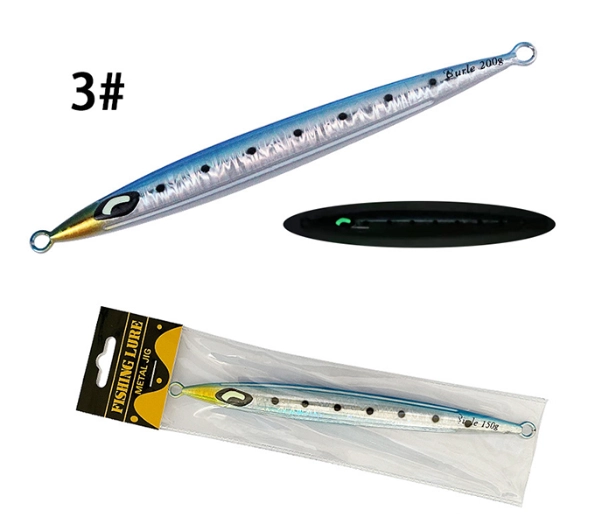
The Luminous Metal Jig Lures come in 100 g, 150 g, 200 g, 250 g, and 300 g sizes. Their glow supports low-light or deeper presentation, while the lure can be worked with slow-sink or sharp-twitch actions.
To Surf Fish with one, cast across open water, allow it to reach the required layer, and retrieve it with controlled lifts and pauses. Keep enough tension to feel the lure without forcing it continuously into the bottom. The heavier versions require a rod explicitly rated for their full weight and should not automatically be paired with the Cork handle fishing rod.
Lure Weight Must Match Current and Rod Rating
Too little weight drifts without control. Too much weight overloads the blank, weakens casting rhythm, and raises the risk of line or rod failure.
Start with the lightest lure or sinker that reaches the target lane. For trade buyers creating product bundles, the rod, reel, line, and lure should be grouped by stated ratings and intended use, not simply by appearance or price.
Commercial SKUs Bundling Matrix for Distributors
Retailers should not build beginner bundles by matching products only by price, color, or package size. The full casting load includes the lure or sinker, hook, swivel, leader, and bait. That combined weight must remain within the rod’s printed casting range. Laike’s Luminous Metal Jig Lures are available from 100 g to 300 g, while the published information for the Cork handle fishing rod does not state a corresponding lure-weight rating. For this reason, distributors should not automatically place these two products in the same ready-to-fish kit.
| Proposed Retail Bundle | Rod and Reel Direction | Terminal Tackle Direction | Bundling Decision |
|---|---|---|---|
| Mobile Beginner Beach Kit | Cork handle fishing rod from 1.8 m to 2.7 m with a balanced Big Game Spinning Fishing Reel | Simple bait rig or lure confirmed within the rod’s printed casting range | Suitable after checking rod power, line rating, and total casting weight |
| General Bait Surf Kit | Rod selected for the intended sinker and bait load, paired with a reel chosen by line capacity and balance | Main line, swivel, single leader, hook, and the lightest sinker that can hold bottom | Suitable when every component is documented on the bundle specification sheet |
| 100–150 g Metal Jig Kit | Rod explicitly marked to cast the selected 100 g or 150 g jig, with a reel that provides suitable line capacity | Matching Luminous Metal Jig Lure, leader, and terminal hardware | Approve only after confirming the complete rig weight, not the jig weight alone |
| 200–300 g Heavy Jig Kit | Dedicated heavy-rated rod with a matched reel, line, leader, and drag system | 200 g, 250 g, or 300 g Luminous Metal Jig Lure | Do not include the Cork handle fishing rod unless its verified casting rating covers the complete load |
| Mixed Display Bundle | Rods, reels, jigs, and tackle storage sold as coordinated options rather than a fixed ready-to-cast combination | Product labels explain which items require separate compatibility checks | Appropriate for retailers that want broader choice without implying universal compatibility |
Each commercial SKU should record the rod length, rod power, casting-weight range, reel size, line capacity, main-line rating, leader rating, and maximum assembled terminal weight. The package should also state whether the kit is intended for bait fishing, light lure casting, or heavy jigging. This prevents a buyer from treating a compact 178 g rod as evidence that it can cast a 300 g lure. Rod mass describes how much the rod itself weighs; it does not state how much terminal weight the blank can safely cast.
For distributors, this sign-off step reduces three common sources of returns: overloaded rods, poorly balanced rod-and-reel combinations, and lures that are too heavy for the intended beginner. When verified casting data is unavailable, the safer commercial decision is to sell the item as a separate component rather than label it as part of a ready-to-fish bundle.
When Is the Best Time to Surf Fish?
The best time for surf fishing is not one fixed hour. Current, tide stage, light, wind, target species, and safe access all affect the decision.
Moving Water and Tide Changes
Arrive before a tide change so you can see how water forms around bars and cuts. A rising tide may cover new feeding ground, while a falling tide may concentrate flow through channels. Neither tide direction is automatically better on every beach.
Record where bites occur relative to the tide. After several trips, these local notes become more useful than a general rule copied from another coastline.
Dawn, Dusk, Wind, and Water Clarity
Dawn and dusk provide lower light and often easier beach access. In clear water, use quieter movement and a less aggressive presentation. In stained water or low light, vibration or a luminous jig may remain easier for fish to detect.
Wind should be judged by both direction and strength. Strong onshore wind can shorten casts, bow the line, move the rig, and make wave timing harder.
Safe Conditions and Local Rules
Check the marine forecast, tide table, wave conditions, lightning risk, and local fishing rules before leaving. Licenses, seasons, size limits, protected areas, and hook rules vary by location.
Rip currents flow away from shore, and breaking waves can knock an angler off balance even in shallow water. Avoid deep wading, unstable rocks, and locations without a clear exit route.
How Should Beginners Organize, Maintain, and Upgrade Their Gear?
Salt, sand, wet hooks, and mixed storage cause faults that are easy to prevent. Organization and cleaning should be part of every trip.
Portable Storage for Faster Rig Changes
The 4 Colors Portable Multi function Tackle Box measures 360 × 370 × 200 mm, comes in four colors, and supports OEM and customized-logo orders.
Store clean hooks, used lures, leaders, sinkers, swivels, and tools separately. Wet or salty items should not be placed beside unused terminal tackle. A fixed compartment layout also makes missing pliers, damaged hooks, or low leader stock easier to notice before leaving home.
Post-Trip Care That Reduces Corrosion and Replacement Costs
Rinse exposed salt with gentle freshwater flow without forcing water into the reel body. Wipe the rod blank and guides, dry the reel exterior, and let lures and hooks dry before closing the tackle box.
Check guide inserts for chips, line for rough sections, drag movement for uneven resistance, and hooks for rust or bent points. Corrosion-resistant treatment reduces exposure risk but does not replace cleaning.
Laike Service, OEM Support, and Contact Options
Laike can combine rods, reels, lures, lines, hooks, tools, and storage into matched product selections. This helps distributors avoid listing a rod beside a lure weight or reel size that does not fit the same use.
Its supplied company profile also states support for OEM molds, graphic design, branding, packaging, third-party inspection, and after-sales handling. These services are relevant when a buyer needs a coordinated product range rather than separate catalog items.
Conclusion
To Surf Fish with fewer avoidable problems, read the beach first, keep the setup balanced, use a simple rig, and choose timing based on current and safe conditions. Laike’s reel, cork-handle rod, luminous jig, and tackle box serve different parts of the system, but each still needs to match rod ratings, line capacity, water movement, and target fish.
For buyers who need help matching reel sizes, rod lengths, lure weights, storage, or OEM packaging, Laike can review the intended market and use scenario before a product list is finalized. Share the target fish, shore conditions, price level, and order format through the contact page so the discussion starts with workable specifications rather than a general catalog request.
FAQ
Q: What is the easiest way to Surf Fish for the first time?
A: Start with a spinning setup, one bottom rig, and a beach section with visible troughs or current edges. Test several casting distances, keep the terminal weight inside the rod rating, and avoid deep wading.
Q: How heavy should a surf fishing sinker be?
A: Use the lightest sinker that holds bottom in the current. Include the bait, hook, leader, and sinker when checking the rod’s marked casting range.
Q: Can a beginner use a luminous metal jig from the beach?
A: Yes, provided the rod is rated for the jig weight. Use controlled lifts and pauses in open water, and avoid dragging a heavy jig through rocks or dense bottom structure.