
You speed up the retrieve and feel a much stronger pulse. Is the VIB lure working better, or has it simply climbed out of the layer you wanted to fish? I’d want to see where it went before choosing between the samples. A pause or a lift gives you another way to alter the path, with current, line and weight still involved. The model name can’t tell you exactly what it will do in your water.
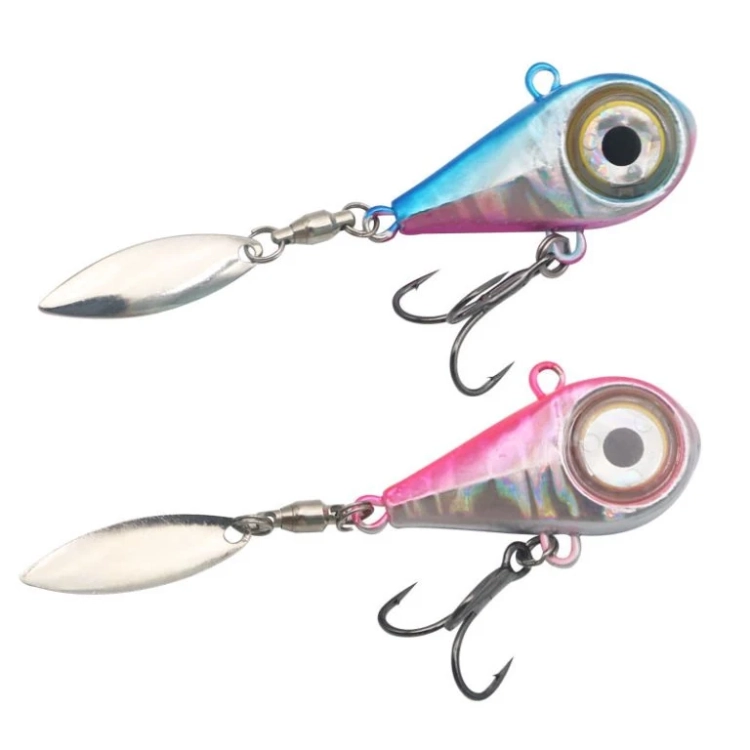
Read the Lure’s Response in Shallow Water
If you can’t see the lure, the first trial is asking you to infer rather a lot from the rod. I’d bring it closer to the bank or use clearer water, just to watch the vibration begin during a steady wind. Then try a pause and a small lift. A roll or a tangle calls for a look at the hook and connection before trying again. More speed won’t tell you much about a lure that is already fouled. You need to see its normal action first.
More speed usually puts more water force on the body, and the vibration may sharpen. But watch where the lure goes while that happens. It may rise out of the intended layer or become awkward around shallow cover. Slowing down may let it stay lower for longer, provided it still works at that speed. I’d rather check that on the selected lure than assume another VIB model’s behavior transfers to it.
Use Rod Input to Change the Path
Try a short lift after watching a steady retrieve. On the fall, allowing slack takes some tension off the descending lure; that is a different movement from winding it straight back. It isn’t a depth setting. Wind and current are still there, and the line’s diameter and the lure’s weight haven’t stopped mattering. You can repeat the lift and still get a different path.
I’d repeat a few casts before changing anything. Use roughly the same distance and pause, then wind steadily. Once that looks consistent, try a different pause; leave the lift alone until the following comparison. A note about a tangle or snag is just as useful as a note about a bite here. Otherwise the good cast may owe more to an unfouled hook than to whatever change you thought you were testing.
Laike‘s hard fishing lure range provides a starting point for comparing lure types. Match the selected lure’s stated weight to the fishing rod range and the reel setup shown in the product catalog. A catalog category does not confirm an exact casting range for every model, so check the item specification before use or stocking.
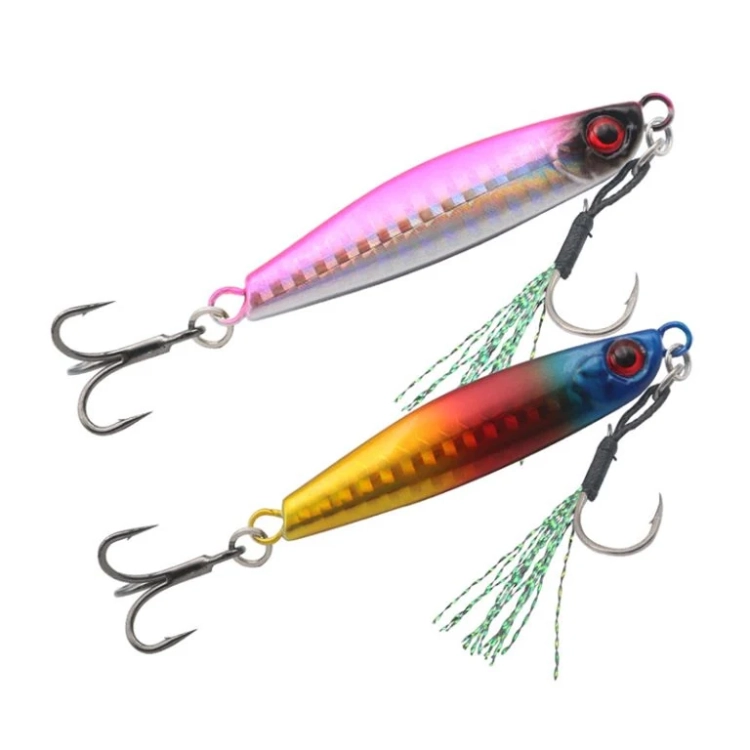
Watch the Conditions That Change the Test
Where will the pause leave the lure? Over clear bottom there may be little to catch, whereas weeds, rock and submerged structure call for more care. Current is adding its own load throughout. Line choice is a compromise too: it needs to tolerate the fish and cover, yet going heavier adds drag that may alter the movement. I’d make that choice with the rod rating in view, rather than select line purely for the feedback it gives.
Before a sample can stand for a whole retail item, I’d ask the supplier to identify it on paper. That means the body dimensions and weight as well as the hooks and the label on the pack. Then use one line and retrieve to compare it with the other samples. An interesting result from a brief trial elsewhere is still only that result. I’d be reluctant to put a general performance claim on the range on the strength of it.
For product and sourcing questions, use Laike’s contact page with the lure type, intended water conditions, and buyer’s target assortment.
Read the Lure in the Water, Not Only in a Tank
A tank lets you see things you might miss on a cast. It doesn’t reproduce every line angle or current. For me, it would be the introduction to the samples, followed by a trial of the chosen configuration in its intended water. There you have speed and line tension to contend with, as well as rod angle and depth. What you see and feel can’t be attributed to internal weight or the published description alone.
One way to lose a useful comparison is to change the tackle between samples. I’d leave the rod, reel, leader and line as they were, and try to repeat the cast distance and cadence. That leaves room to investigate a body profile or weight. Does it keep straight, rise, roll or foul? Take that question into the intended water too. Keep the still-water observation if you later try current; it describes a different trial, even with the same tackle.
Before comparing OEM weights, ask a rather literal question: what was on the lure when it was weighed? I’d want to know whether the number includes its hooks and rings. The manufacturer’s nominal weight and dimensions can go into the record beside a description of those fittings, the finish and pack revision. Otherwise an apparent comparison of bodies may actually be a comparison of two different hardware arrangements.
Match Vibration to Conditions and Tackle
A sharp pulse is easy to notice and tempting to treat as an improvement. I’d reserve judgment until I’d checked the depth and how controllable the lure remained beside the cover. Changing the line diameter or rod action can change what reaches your hand, and current can do it too. Keeping the tackle and retrieve consistent makes the observation easier to interpret. The useful question is whether the movement suits this fishing situation.
Line diameter and rod loading also change feedback. A heavier line can dampen what the angler feels, while a different rod action can make the same lure seem sharper or softer. When evaluating a hard lure, compare sample specifications and action under the same tackle setup. Check whether a proposed lure weight sits within the chosen rod’s stated casting range, and confirm model-level details before placing a production order.
Turn the Trial Into a Repeatable Sample Review
An odd-tracking sample deserves a look at its rings and hooks. A small difference there may affect balance even when the body shape seems familiar. Before putting it away, I’d take a photograph tied to its model reference, with a note of size, weight, finish, fittings and pack revision. Those are the details you can settle while the samples are side by side. Leaving them for later means trying to reconstruct what you compared.
Now put the sample beside its pack. Is that still the color code and item you thought you were approving? I’d read the model and intended-use wording at this stage as well. Any finish or hardware combination that matters should be written into the order, since a reference photograph may leave room for interpretation. Settle how proposed component or color changes will reach you for approval before production.
‘Strong vibration’ leaves the next reviewer with little to repeat. A better trial note names the water and approximate depth, line and rod, retrieve and lure configuration. I’d add what the lure actually did and what I changed for the following cast. A brief note is enough if it lets somebody distinguish a different sample from different conditions. Without that distinction, the result is hard to use for an order.
Key Takeaways
- I’d watch for the lure coming up as the wind gets faster, even when the stronger pulse feels promising.
- A rod lift changes the path, with line, current and cover still influencing what happens next.
- Try the actual model in repeatable steps, and confirm its specification before ordering it.
FAQ
Q1: Does a faster retrieve always create more useful vibration?
A: Not always. More movement may come at the cost of the intended depth or control beside cover. Watch the path as well as feeling the pulse.
Q2: How can an angler compare two VIB lures fairly?
A: Keep the rod and line, cast distance, pause and retrieve speed consistent. Then change one lure variable. You need something held constant to make sense of the difference.
Q3: Can a rod lift keep a VIB lure at a fixed depth?
A: No fixed depth follows from the lift alone. The lure still has a weight and a line attached, moving through water that may have a current. I’d use the lift to alter the path, not assume it will hold a set depth.
Q4: What should buyers confirm on a VIB lure sample?
A: Which exact item is in front of you, and what is fitted to it? I’d settle that along with weight, body dimensions, line attachment and packaging. Otherwise similar bodies with different hooks can slip into the same comparison.
Q5: Where can buyers compare Laike lure options?
A: Begin with Laike’s official hard-lure range, then request the details of the model being considered. A category is useful for finding options; the order needs the selected item’s specification.