Selecting the right fishing line is not just about strength or visibility—it’s about optimizing every aspect of angling performance. Line stretch, material composition, diameter, and even memory all play crucial roles in determining whether a strike becomes a landed fish. If you’re focused on hook setting efficiency, durability, and responsiveness, a deep comparison of line attributes is essential.
Laike is a seasoned manufacturer with over a decade of expertise in fishing gear production. Their offerings span across fishing lines, rods, reels, lures, and more, exported to over 20 countries. From OEM/ODM customization to strict quality assurance and on-time delivery, Laike is equipped to support both large-scale distributors and niche retailers.
Relationship Between Line Stretch and Hook Penetration
The stretch of a fishing line directly influences how force is transmitted from the rod tip to the hook point. This dynamic can be the difference between a solid hook-up and a missed strike.
Higher Stretch Reduces Hook Setting Efficiency
When using lines with excessive elasticity, much of the energy generated during a hook set dissipates through elongation. This can blunt the force needed to drive the hook through tough jaw tissue. Nylon has good ductility, which can absorb impact forcethe elasticity of the barbed wire makes the fish hook not be pulled out directly from the mouth, but stretched a little, so that the fish hook just hooks the fish mouth. While this feature aids in shock absorption, it may hinder penetration during fast strikes.
Low-Stretch Lines Improve Reaction Time and Sensitivity
Lines with minimal elongation transfer energy more efficiently. This enhances both reaction speed and tactile feedback. Braided and fluorocarbon lines are generally preferred where immediate hook sets are critical. Their low-stretch properties ensure your hand feels even subtle bites.
Controlled Stretch Balances Shock Absorption and Hooking Power
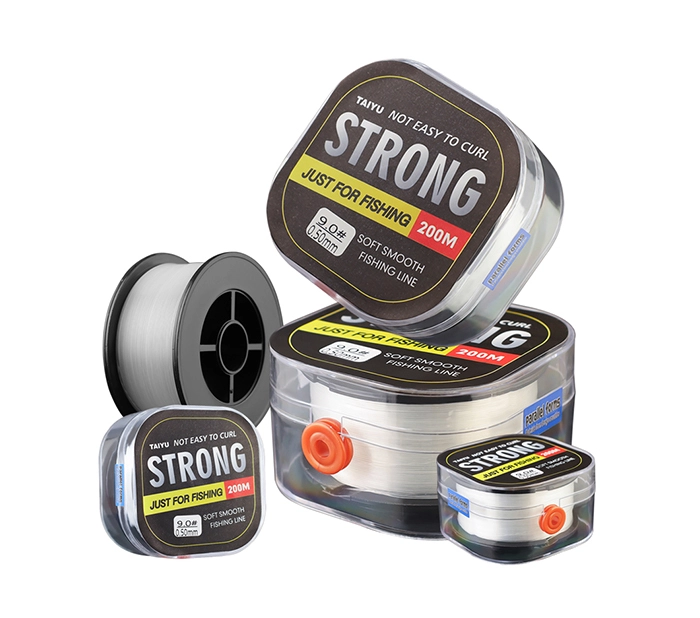
Instead of going to extremes, some lines offer engineered elasticity that blends sensitivity with cushioning. Products like the Strong Nylon String Fishing Line strike this balance well—offering enough give to reduce break-offs without compromising hook penetration.
Role of Material Composition in Line Elasticity
Different materials yield different performance characteristics under tension. Choosing the correct composition for your fishing conditions is essential.
Nylon Exhibits Moderate Stretch for Versatile Use
Nylon line is made of a single strand of nylon materialhigh-strength and low-elongation nylon has a narrow molecular weight distribution, uniform crystal distribution and size, and a high degree of orientation, making it most suitable for making fishing lines. This makes it ideal for multi-species and variable environments.
Fluorocarbon Offers Lower Stretch for Faster Hook Sets
Fluorocarbon lines are denser and less elastic than nylon, making them excellent for finesse techniques where bite detection is key. They also sink faster due to higher density.
Braided Lines Provide Minimal Stretch for Maximum Control
With virtually no stretch, braided lines offer unmatched sensitivity and instant hook setting. However, they require careful drag management to avoid pulling hooks from soft-mouthed species.
Performance of Laike’s Nylon and Fly Fishing Lines in Hook Setting
Material formulation isn’t enough—consistency in manufacturing defines reliability across sessions.
Balanced Stretch for All-Around Performance
The Strong Nylon String Fishing Line provides excellent tensile performance with good elasticity to absorb impact while retaining knot strength. It is ideal for situations that demand both toughness and flexibility.
Responsive Action for Precise Hook Placement
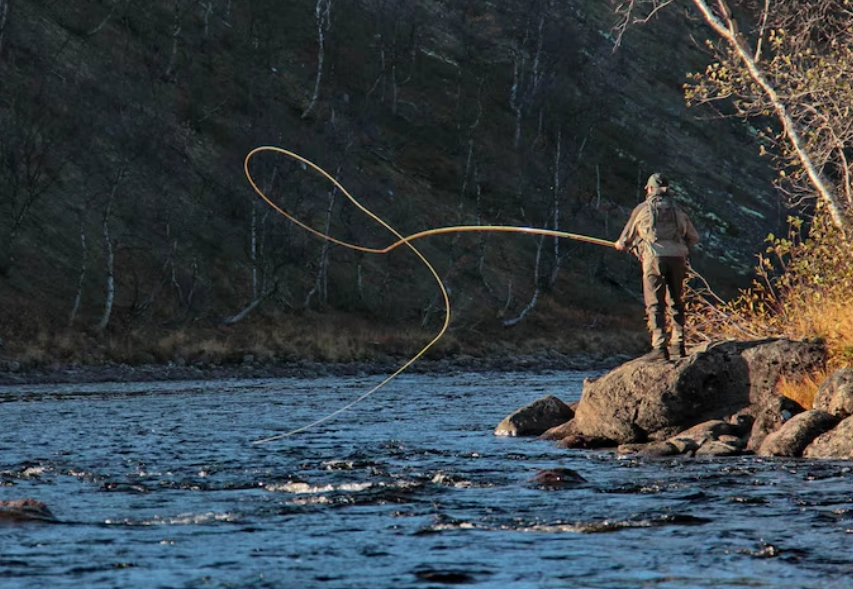
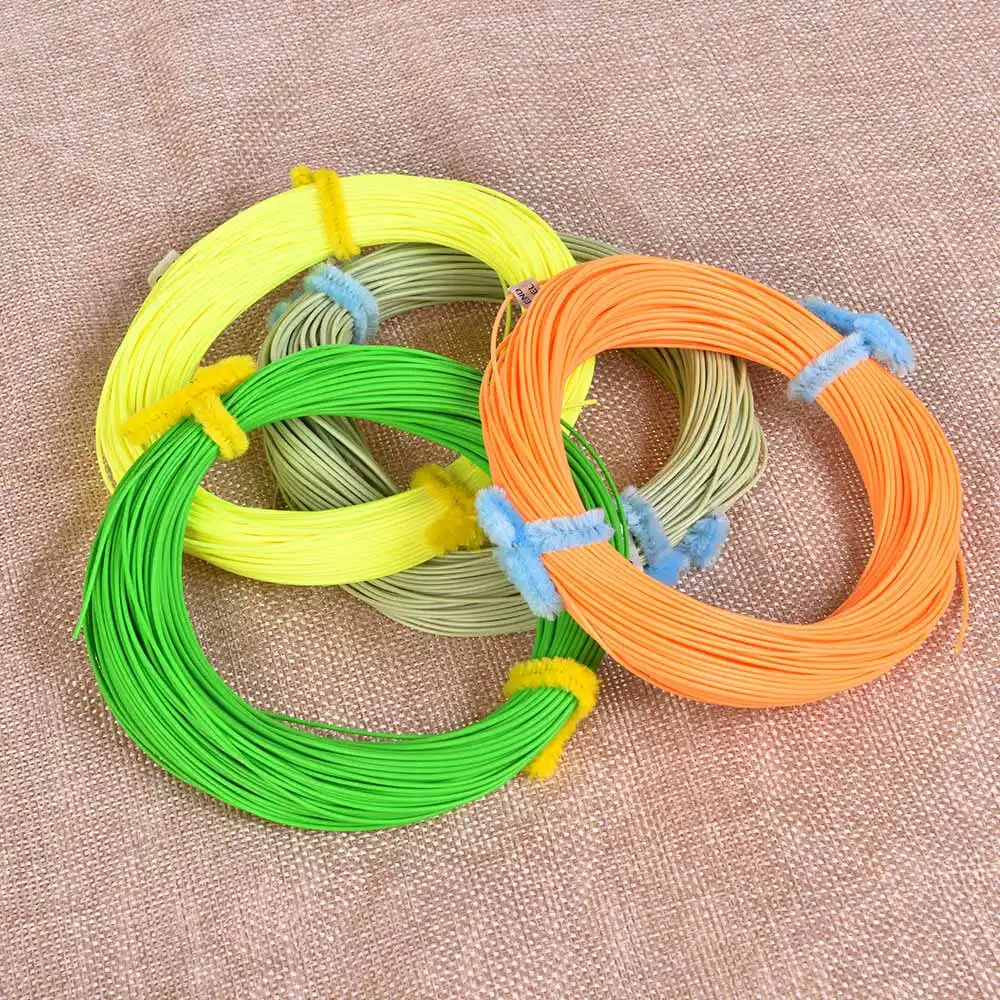
The Fly Fishing Line is available in floating configurations with 100ft Weighted Forward design and welded loops for quick rigging. The design ensures accurate line control during delicate presentations, enabling precise hook placement.
Laike’s Engineering Ensures Consistent Elasticity Across Product Range
Strict quality control procedure and support for OEM & ODM orders ensure consistent performance in every batch.
What Are the Key Strength Metrics Experts Should Compare?
Evaluating strength is not only about total resistance but also how well a line performs under specific stress points.
Breaking Strength as a Measure of Load Capacity
Breaking strength indicates how much load a line can endure before failure. Super strong pulling force gives anglers the confidence to fight against deep-sea giantsit can effectively resist the impact of the sudden burst.
Abrasion Resistance Under Real Fishing Conditions
Facing the friction of complex seabed environments such as reefs and corals, it can still maintain good performance and is not easy to wear and fuzz. Such resistance prolongs line life in harsh underwater terrains.
Knot Strength and Its Effect on Overall Reliability
Most fishing line breakages occur at the knots, and the nylon line has the least loss in knot strength. High knot integrity ensures safety during aggressive fights or long-distance casts.
How Does Diameter Influence Performance and Handling?
Diameter affects stealth, casting ability, and compatibility with tackle.
Thinner Diameter Enhances Casting Distance and Stealth
Thin lines create less water displacement and are harder for fish to detect. The specific gravity is 1.14easy to control the lure on the water surface. This assists both in long casts and subtle presentations.
Thicker Lines Improve Handling and Durability in Tough Environments
It is soft, not easy to get tangled or friedeasier to manage than braided wire. These characteristics make thicker nylon variants useful in cold weather or rocky environments.
Balance Between Diameter, Strength, and Application-Specific Needs
Matching diameter to rod guides, reel capacity, and fish size is essential. Laike’s product range includes solutions tailored for freshwater finesse to offshore power fishing scenarios.
Why Choose Laike as Your Preferred Fishing Line Supplier?
Selecting a supplier is about trust, quality, and operational capability—not just product specs.
Commitment to Quality Through Advanced Manufacturing
Strict quality control procedure and engineering consultants from Germany and USA ensure product consistency from concept to delivery.
Extensive Product Portfolio Supporting Multiple Techniques
From Fly Fishing Line to Strong Nylon String Fishing Line, Laike’s catalog spans all angling disciplines.
Global Service, OEM Capabilities, and Industry Expertise
Support OEM & ODM Order through a full-service customization process—details at Laike Custom Services. For inquiries or volume discounts, contact Laike Sales Team.
FAQ
Q1: What type of fishing line offers the least stretch?
A: Braided lines offer minimal stretch, providing maximum sensitivity for fast hook sets.
Q2: Why is memory important when choosing a fishing line?
A: Low-memory lines reduce coiling and tangling, enhancing casting accuracy and retrieval efficiency.
Q3: How does Laike support custom orders?
A: Laike offers OEM/ODM services with online consultation, sample confirmation, mass production, and packaging support.