
The best knot for jig head fishing is not only the knot that looks tight on the hook eye. It must hold under repeated casting, bottom contact, sudden strikes, and the rubbing that happens when soft bait, metal jig, or assist hook rigs work through water. A weak knot can make a good hook useless, especially when the fish hits on the fall or turns hard near rocks, weeds, or current.
Laike supplies fishing tackle for freshwater, saltwater, lure fishing, jigging, and mixed retail programs. Its product range covers fishing hooks, jig heads, fishing reels, rods, lines, lures, tools, and accessories, with support for OEM and mixed order needs. For buyers, that matters because a jig hook is rarely purchased alone. The hook shape, line, lure weight, packaging, and target user group all need to match. This guide explains the best knot for jig head setups, then connects knot choice with practical Laike hook options.
What Is the Best Knot for Jig Head in Most Fishing Setups?
For most anglers, the answer starts with two knots: the Palomar knot and the improved clinch knot. Both are simple enough for field use, and both keep the line seated firmly on the hook eye. The best knot for jig head fishing depends on line type, lure movement, and how often the user needs to retie.
A jig head is used in a rougher way than many bait hooks. It hits bottom, clips grass, bumps stones, and gets changed often when color or weight does not match the water. The knot should be easy to inspect and easy to redo without wasting time.
Palomar Knot for Simple Strength
The Palomar knot for jig head use is a common pick because the line passes through the eye twice before the final tightening. That gives a stable connection for many soft bait and jig head rigs. It works especially well when the jig head has a clean eye and enough opening space for doubled line.
To tie it, pass a doubled line through the eye, make an overhand knot, pass the jig head through the loop, wet the line, then pull evenly. The key is not rushing the final pull. If the loop crosses or bites into itself, the knot loses shape before the fish ever touches it.
Improved Clinch Knot for Everyday Jig Fishing
The improved clinch knot is easier for many beginners, especially with smaller jig heads. It is also practical when anglers change lures often. Thread the line through the eye, wrap the tag end around the main line, pass it back through the first loop, then through the larger loop before tightening.
This jig head fishing knot is not complicated, but it needs clean wraps. Crowded or twisted wraps create pressure points. For daily freshwater jig fishing, it remains a useful knot because it can be tied quickly with cold hands or in windy conditions.
Loop Knot for Better Lure Movement
A loop knot for jig head fishing gives the lure more room to move. This can help soft bait swim more naturally, especially when the bait needs a little swing on the drop. It is useful when the target fish are following but not committing.
The trade-off is simple. A tight knot gives more direct control. A loop knot gives more action. If the jig head is being hopped along the bottom with short lifts, a firm knot may feel better. If the lure needs a wider, freer motion, the loop knot becomes more useful.
Why Does Knot Choice Change Between Jig Heads and Jig Hooks?
Not all jig hooks pull in the same direction. Some jig heads pull from the front. Metal jig hooks may face quick jerks and sudden slack. Assist hooks take force through cord, split ring, and hook point together. The best knot for jig head setups may not be the same knot used for a metal jig or jigging assist hook.
The hook eye angle, fishing line, water depth, and retrieve style all change the stress on the knot. A knot that works on a light soft bait jig may not be ideal for deeper jigging.
Hook Eye Angle and Pulling Direction
A jig head often has a fixed eye molded near the lead head. If the knot sits at a bad angle, the line may rub against the edge of the eye or pull the lure off balance. Before casting, the knot should sit cleanly, the tag end should be trimmed close, and the jig head should hang in a natural position.
This is also why buyers should check hook eye finish and shape when comparing jig heads. A strong hook body is not enough if the eye damages line during repeated use.
Soft Bait Action and Falling Speed
A soft bait jig works through movement. The bait swims, drops, turns, and sometimes glides. The knot affects that action. A tight Palomar knot can make the jig feel direct. A loop knot can help the bait move with less stiffness.
If you are teaching customers how to tie a jig head, it helps to explain this difference clearly. Many lost bites are not caused by hook sharpness alone. The bait may be falling too stiffly, or the knot may be restricting the lure.
Freshwater and Saltwater Pressure
Freshwater jigging often deals with grass, mud bottom, stones, and smaller structure. Saltwater jigging adds stronger fish, deeper water, corrosion, and more violent strikes. In these conditions, anglers should check knots more often. A small fray near the hook eye can be enough to lose a fish.
The knot should be checked after snags, hard hooksets, and fish teeth contact. Retie early rather than after the hook is gone.
Which Laike Jig Hook Should You Use for Different Fishing Scenarios?
A good product recommendation should start from the fishing scene. Soft bait fishing, metal jigging, and heavy assist hook use do not ask for the same hook. Laike’s hook range gives buyers a way to match knot choice with product type, user skill level, and end-market demand.
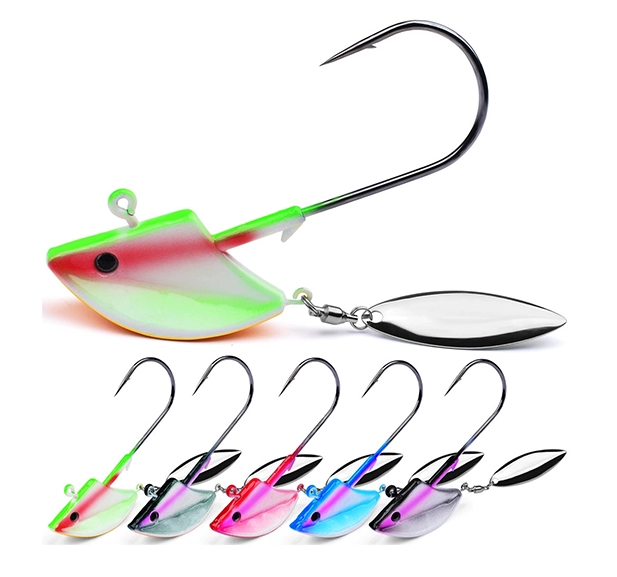
Laike 5 Colors Jig Head Hook for Soft Bait Fishing
The 5 Colors Jig Head Hook fits soft bait fishing where color, shape, and easy rigging matter. It is useful for buyers building beginner-friendly lure sets or mixed jig head packs. The color options help anglers change presentation without changing the whole rig.
For this product type, the best knot for jig head users is usually the Palomar knot for direct control, or a loop knot when the soft bait needs more swing. Retail customers will appreciate simple guidance printed or explained with the product, because many beginners lose fish from loose or poorly seated knots.
Laike Metal Jig Hook for Jigging and Search Fishing
The Metal Jig Hook is better suited to jigging, search fishing, and faster lure movement. Metal jig fishing puts repeated shock on the connection because the lure is lifted, dropped, paused, and struck suddenly. The knot for metal jig use should be checked more often than a simple bait hook knot.
For buyers serving lure anglers, this type of hook fits customers who fish deeper water, open water, or saltwater edges. The hook and knot both need to handle sudden direction changes. A clean, compact knot is safer than a bulky knot that catches on hardware.
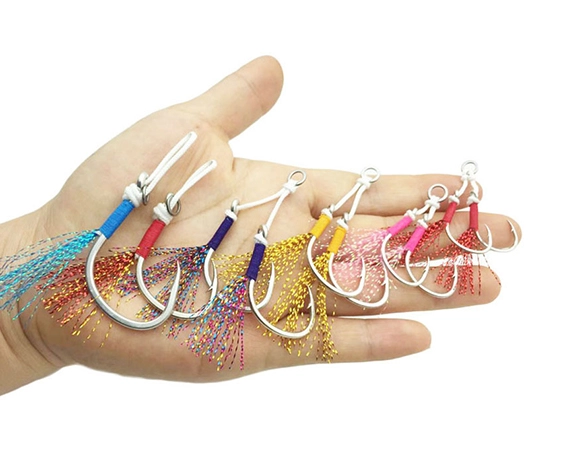
Laike Strong Carbon Steel Jigging Assist Hooks for Heavy Pull
The Strong Carbon Steel Jigging Assist Hooks suit heavier jigging setups. Laike’s hook knowledge describes high carbon alloy hooks as having strong pulling resistance, corrosion resistance, and better shape stability for medium and large fish. That kind of hook makes sense when the user is not just catching small fish near shore.
For this setup, the fishing knot for jigging assist hook rigs should not be treated casually. The hook may be strong, but the full system still depends on line, ring, assist cord, and knot condition. Buyers can position this product for users who care about stronger jigging rigs, saltwater fishing, and fewer weak points in the terminal tackle.
How Should You Tie and Test the Knot Before Casting?
A knot should be tested before the first cast, not after the first missed fish. The best knot for jig head fishing is only reliable if it is tied cleanly. Most knot failures start with small mistakes: dry tightening, crossed wraps, too short a tag end, or a rough hook eye that was never checked.
Wet Tighten and Pull Test
Before tightening, wet the knot. This reduces heat and helps the wraps settle. Pull the main line first, then the tag end, then the jig head. The knot should tighten smoothly rather than jump into place.
After trimming, leave enough tag end that the knot does not slip under shock. A tag end cut too close may look neat, but it gives no room for movement under load.
Check Hook Eye and Line Angle
The line should leave the hook eye in a clean direction. If the knot twists sideways or jams against the head, retie it. This is common with jig heads that have painted heads, molded shapes, or tight hook eye positions.
For store buyers, this is also a useful product check. The hook eye should be open enough for common fishing lines and smooth enough to avoid cutting or scraping.
Retie After Snags and Hard Strikes
Jig fishing often means contact. Rocks, weeds, wood, shells, and fish teeth all damage line. After a snag or hard strike, run fingers over the last section of line. If it feels rough, retie.
This simple habit reduces wasted hooks, lost lures, and customer frustration. It also helps buyers explain maintenance in a practical way instead of only selling more tackle.
When Should Buyers Contact Laike for Jig Hook Supply and Service?
As a premier fishing tackle manufacturer with 10+ years of experience and their own factory in Weihai , Laike has delivered 6,000+ OEM product modules to clients across 31 countries. Their hooks are forged from high-carbon alloy steel for superior pulling resistance and corrosion resistance when targeting medium and large fish. They are BSCI certified and have passed SGS and TUV inspections for 16 consecutive years. Every jig head features an open, perfectly smooth hook eye , eliminating raw burrs or paint blockages that scrape lines and compromise knot strength during sudden strikes.
If your order needs jig heads, metal jig hooks, assist hooks, line, and packaging to work as one program, product matching should happen before bulk purchasing. Laike can support buyers with hook selection, mixed fishing tackle supply, OEM packaging discussion, and order follow-up. For product details, packaging needs, or category planning, use the Laike contact page and prepare your target fish, market, line range, and preferred hook types before sending the inquiry.
FAQ
Q: What Is the Best Knot for Jig Head Fishing?
A: The best knot for jig head fishing is usually the Palomar knot for simple strength and clean pulling direction. For light soft bait action, a loop knot may work better because it gives the jig head more freedom to move.
Q: Is a Loop Knot Good for Jig Head Hooks?
A: Yes, a loop knot can be good for jig head hooks when the bait needs a more natural swimming or falling action. It is less direct than a tight knot, so anglers should use it when lure movement matters more than a fixed connection.
Q: Should I Use the Same Knot for Jig Head and Metal Jig Hooks?
A: Not always. A jig head often works well with a Palomar knot or improved clinch knot. Metal jig hooks and assist hooks face more jerking, dropping, and sudden strikes, so the knot and the full rig connection should be checked more often.