
When comparing cork vs EVA rod handles, focus on feel, fit, maintenance and finish. Choose cork if you prefer a firm, natural surface and a traditional appearance. Choose EVA if you prefer a cushioned foam grip and want to compare different shapes and firmness levels. In either case, judge the complete rod with a reel fitted before deciding.
The material name alone tells you little about grip quality. A comfortable handle also needs the right diameter, length and shape for the way you hold a rod. For tackle retailers, that makes sample inspection more useful than a photograph or a simple “premium grip” label.
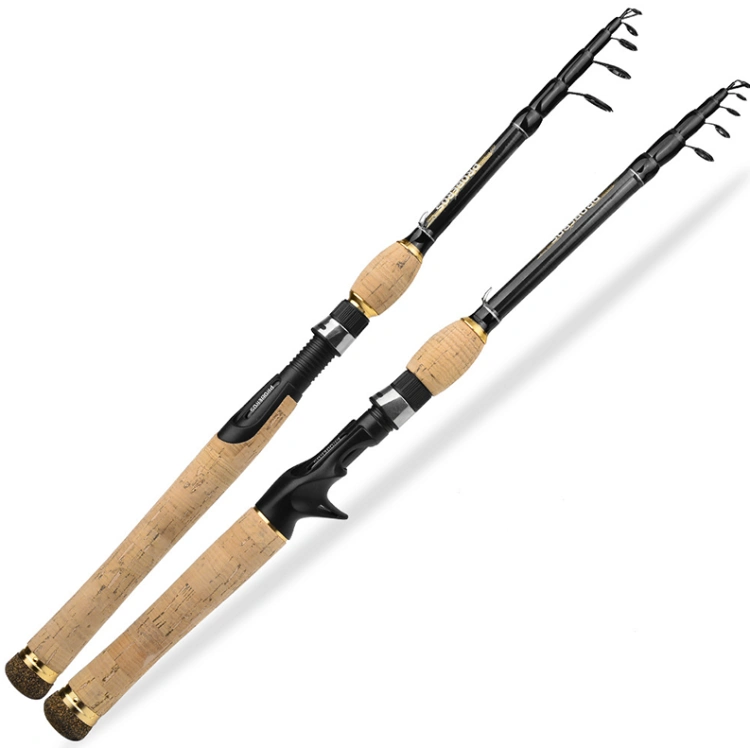
Laike lists a cork handle fishing rod within its rod range. The checks below can help you assess that type of product and compare handle specifications before requesting a quotation.
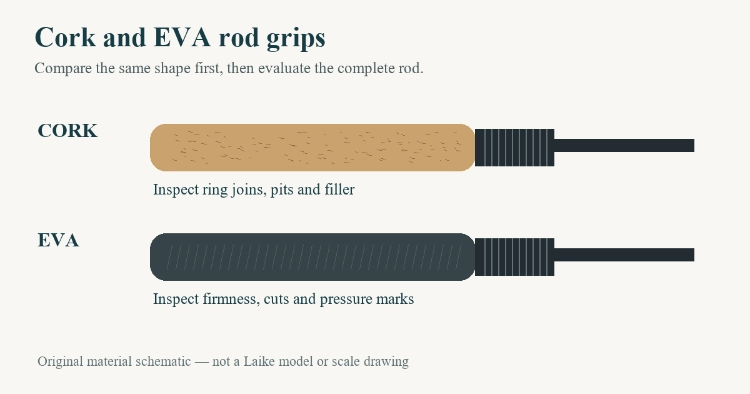
What Cork and EVA Change in a Fishing Rod Handle
Cork provides a firm surface with visible natural texture. EVA, short for ethylene-vinyl acetate, is a foam material that can provide a softer feel. Neither description tells you exactly how an individual handle will behave: cork construction, foam firmness and the finished shape all need inspection.
Modern formulations can be firmer than older foam grips. EVA appears on expensive rods. Foam is therefore not, by itself, evidence of a budget-quality build.
Cork quality varies too. Look at the surface, the joins between rings and any visible filler. A clean product photograph cannot show whether a handle has loose material, an uncomfortable ridge or a poorly finished transition beside the reel seat.
| Buying consideration | Cork handle | EVA handle |
|---|---|---|
| Feel | Usually firm, with a natural surface | Can feel more cushioned; firmness varies |
| Appearance | Natural grain and visible variation | Uniform foam finish, depending on construction |
| Wear to inspect | Pits, loose filler, chips and ring gaps | Cuts, dents, compression and surface damage |
| Sample check | Finish consistency and comfort under pressure | Firmness, recovery after pressure and secure fit |
Treat these as inspection priorities, not a ranking of every cork or EVA product. Handle shape can matter more to a particular customer than the difference between the two materials.
Compare Fit and Sensitivity on the Complete Rod
Grip Shape Comes Before Material Preference
Fit the reel you expect to use, then hold the rod in your normal fishing position. Notice whether your fingers rest on the reel seat, the grip or an exposed section of blank. Check whether a locking collar or abrupt change in diameter presses into your hand.
A short grip can feel tidy during light casting but offer little room for a second hand. A longer rear grip may suit a two-handed cast yet catch on clothing or feel awkward when fishing from a seated position. Try those movements with enough clear space around the rod.
For a retail range, ask a supplier for dimensions rather than relying on “comfortable” as a specification. Rear-grip length, maximum diameter, foregrip shape and reel-seat position are all details that buyers can compare between samples.
Handle Material Does Not Establish Whole-Rod Sensitivity
Avoid assuming that every cork-handled rod transmits bites better than every EVA-handled rod. Mud Hole’s discussion questions that simple comparison, particularly when only a small part of the angler’s hand touches the grip.
The blank, reel-seat design, hand position, line and fishing method also affect what the angler notices. Comparing two completely different rods cannot isolate the contribution of the grip material. A claim such as “twice as sensitive” needs a defined test, not just a material label.
When comparing samples, keep the reel and setup as similar as practical. First check comfort, balance and access to the reel controls. A handle that encourages a strained grip is a poor choice even if its material has a strong reputation.
Check Wear and Plan Simple Care
Both materials need care. Cork can collect dirt and develop pits or chips; EVA can be cut or left with pressure marks. Storage, use and construction affect the condition of either handle.
Inspect the Surface and the Bond
Look beyond cosmetic marks. Check for movement between the grip and blank, separation beside the reel seat and damaged sections that affect how securely you can hold the rod. A small color change is different from a handle that twists during normal handling.
On cork, inspect ring joins and filled areas without digging into them. On EVA, look for cuts, deep dents and uneven finishing. Do not aggressively bend a rod or apply heat to test a handle. If a sample appears loose, ask the supplier to investigate it.
Clean According to the Rod Maker’s Instructions
Start with the manufacturer’s care guidance. Where permitted, a soft damp cloth and mild soap are sensible cleaning tools. Remove residue gently, wipe the handle clean and let it dry before putting the rod in a closed bag.
Avoid treating strong solvents, abrasive sanding or heat as routine repairs. A method that changes the grip surface may also affect coatings, adhesives or nearby components. Ask about an approved repair or replacement when damage goes beyond normal cleaning.
For stock storage, keep hard objects from pressing into handles and protect rods from rubbing together. These simple steps also make it easier to distinguish shipping damage from a manufacturing issue when goods arrive.
Use Four Checks Before Approving a Handle Sample
For a personal purchase, these checks help narrow your choice. For retailers and private-label buyers, they turn a subjective preference into a clearer conversation with a supplier.
1. Record the construction. Ask what the handle is made from, including any mixed materials or end caps. If a cork grade is quoted, request its meaning and compare it with the actual sample. A grade name alone is not an agreed acceptance standard.
2. Check the dimensions. Measure the grip and examine its position relative to the reel seat. Record the measurements that matter to your customer, especially when comparing several rod lengths or models.
3. Compare handling in realistic conditions. Try the intended reel, normal hand position and gloves if relevant. With the supplier’s care instructions in mind, check grip security with slightly damp hands. Do not infer wet performance from appearance alone.
4. Keep an approved reference. Photograph the finish and retain the agreed sample for a commercial order. Write down acceptable cosmetic variation and how defects will be handled before production begins.
For example, two rods described as having cork handles might use different grip lengths and reel seats. A customer who likes the material on one model may dislike the other. Recording those differences helps a retailer avoid describing the entire range as if it had one uniform feel.
These are recommended buying checks, not a claim that a particular supplier uses a named laboratory method. Agree any formal test procedure and acceptance criteria directly with the supplier.
Specify the Grip You Want from Laike
Start with the intended fishing method, rod dimensions and target price range. Then describe the grip construction and shape you want to evaluate. If you are comparing cork and EVA versions, ask which options are available for the particular model rather than assuming every rod can be supplied in both.
You can review Laike’s fishing rod range and its customization process before preparing your request. Include a reference photo or drawing, relevant dimensions, branding needs and the sample checks you want to discuss.
For a quotation or sample discussion, contact Laike with those requirements. Confirm the final construction, quantity, packaging and delivery terms for the order. This gives both sides a clearer basis for evaluating the handle than “cork is better” or “EVA lasts longer.”
Frequently Asked Questions
Is Cork or EVA Better for Fishing Rod Handles
Choose according to the finished handle’s fit and feel. Cork suits anglers who prefer a firm natural surface; EVA offers a foam alternative with different firmness options. Compare the complete rod and reel, including grip shape and finish, before choosing.
Does an EVA Grip Mean the Rod Is Cheap
No. EVA appears across different rod price ranges. Blank construction, guides, reel seat, assembly and the quality of the grip all contribute to the product. Judge the actual specification and sample rather than using handle material as a shortcut for quality.
Should You Replace Cork When It Gets Dirty
Dirt alone does not mean a cork grip needs replacement. Follow the rod maker’s cleaning instructions and inspect its condition afterward. Loose sections, significant damage or movement around the blank deserve a repair assessment; simple surface discoloration is a different issue.