
Evaluating printed Fishing Line Specs against actual water performance represents a major technical challenge for tackle distributors and retail store buyers. Line diameter, breaking strength, linear elasticity, and knot retention dictate how a spool handles high-impact strikes and reef friction. Matching polymer physics with specific tactical applications ensures commercial inventories reflect real-world durability.
Laike brings a decade of specialized export experience to global fishing gear buyers. Anchored by a manufacturing base in Weihai and supported by over 200 partner factories, Laike supplies 500+ product models across 31 countries. Operating with BSCI compliance and 16 consecutive years of SGS, TUV, and UPS third-party quality inspections, the company provides OEM/ODM manufacturing alongside 3-day fulfillment on stock inventory. For technical testing methodology and baseline laboratory metrics, consult Fon Fishing’s engineering reference guide on fishing line specification analysis.
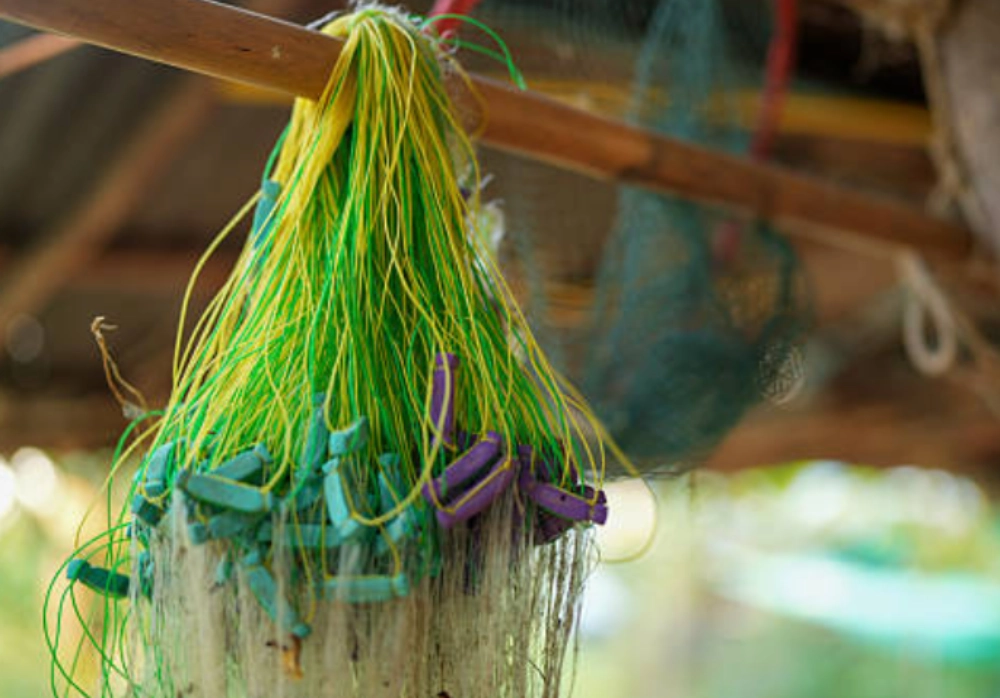
How Do Polymer Properties Dictate Fishing Line Specs and Tensile Strength?
Raw material formulation directly determines linear tensile resistance and elastic recovery when establishing fishing line specs for heavy-duty applications. Examining the supramolecular structure of polyamide resins clarifies how line behaves under sudden shock loads.
Narrow Molecular Weight Distribution and Tensile Elasticity
Polyamide lines manufactured with a narrow polymer molecular weight distribution exhibit uniform crystal size and orientation along the longitudinal axis. This structural alignment maximizes tensile resistance while minimizing inconsistent elongation under strain. High-strength nylon line crafted with narrow molecular weight distribution absorbs kinetic energy from aggressive strikes without permanent deformation.
High Hydrogen Bond Density and 90% Knot Strength Retention
Knot connections represent the primary failure point in rigged terminal tackle. High-density hydrogen bonding within the crystalline region of the nylon matrix reinforces intermolecular cohesion. Reducing amorphous region binding molecules allows quality lines to maintain up to 90% knot strength retention, preventing terminal slippage during extended fish fights.
Product Highlight: Fon Fishing Strong Nylon String Fishing Line
Engineered for trolling, rock fishing, and freshwater setups, the Strong Nylon String Fishing Line utilizes recombined polyamide resin for high linear strength and impact absorption. Its balanced physical density protects against sudden tension spikes while maintaining high knot integrity in demanding marine conditions.
Why Does Line Taper and Weight Rating Matter in Fly Fishing Specs?
Unlike standard monofilament, fly fishing systems rely on the mass of the line itself to transfer casting energy to lightweight flies. Correct weight distribution and hydrophobic surface coatings prevent casting collapse in stream environments.
| Line Type / Feature Metric | Monofilament Nylon Line | Technical Fly Fishing Line |
| Primary Material Matrix | Polyamide Resin (Single Strand) | Supple Core with Tapered Coating |
| Specific Gravity | 1.14 (Slightly Buoyant) | Formulated Floating / Sinking Tapers |
| Knot Retention | Up to 90% Retention | Specialized Loop-to-Loop Connections |
| Core Tactical Function | Direct Tensile Load & Shock Absorption | Precision Energy Transfer & Casting Distance |
Smooth Energy Transfer and Low Line Memory in Stream Fishing
Fly casting relies on precision-tapered coating geometry to loop smoothly through the air. Supple inner core construction eliminates coil memory, ensuring the line lays flat on clear mountain streams for micro-lure and dry fly presentations without disturbing nervous target species.
Hydrophobic Surface Processing for Long-Distance Casting
Water absorption increases line mass and surface drag along rod guides. Specialized anti-water-absorption surface treatments allow the fly line to shoot smoothly through guide rings, accelerating payout speed and maintaining consistent flotation across extended fishing sessions.
Product Highlight: Fon Fishing Fly Fishing Line
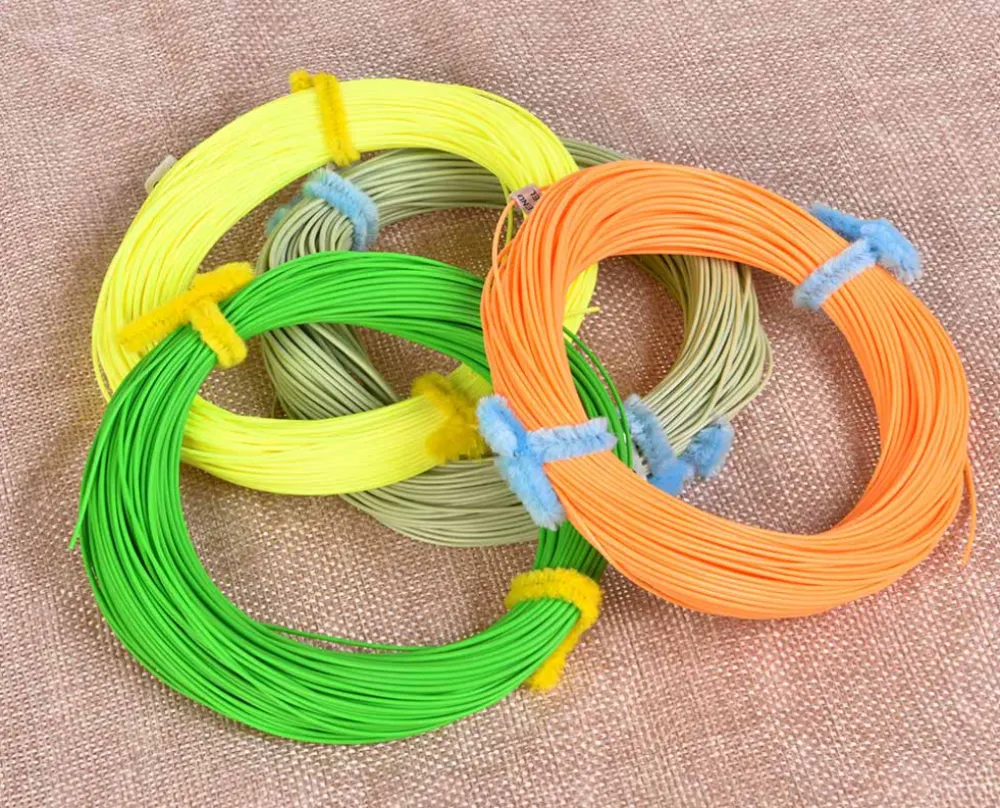
Designed for trout and stream angling, the Fly Fishing Line features a weight-forward taper profile and hydrophobic coating. This structure provides efficient energy turnover, allowing anglers to deliver small flies accurately into tight river structure.
When Should Anglers Match Line Diameter and Buoyancy to Tactical Scenarios?
Selecting fishing line specs for specific tactical situations requires evaluating physical density, abrasion resistance, and storage preservation.
Specific Gravity Balance for Surface Lure Control
Nylon features a 1.14 specific gravity, placing its density very close to water. This slight natural buoyancy allows topwater hard baits to move naturally without pulling lure nose down, giving anglers precise control over walking lures and poppers.
Abrasion Resistance and UV Anti-Aging Performance
Exposure to ultraviolet radiation and rough underwater obstacles degrades polymer chains. Recombined polyamide formulations combined with specialized anti-UV surface processing prevent strength drops caused by reef friction, saltwater exposure, and seasonal temperature changes.
Spool Strap Architecture for Line Tension Management
Line integrity can be compromised before reaching the water if bulk spools unravel during transport. Specialized spool bands equipped with a center hole hold line ends securely under uniform tension, allowing clean payout and re-tightening during warehouse storage or field spooling.
How Can Commercial Retailers Optimize Fishing Line Technical Parameters and Inventory Ratios?
Retail store owners must balance bulk fishing line specs to cover diverse customer demands while protecting store profit margins.
Direct Factory Sourcing to Maximize Retail Margins
Purchasing through multi-tiered distribution networks adds unnecessary markups. Sourcing fishing line specs directly from a verified Chinese OEM manufacturer removes intermediate costs while granting direct oversight over line diameter tolerances, breaking strength consistency, and private-label packaging.
Consolidated Supply Chains Across 500+ Catalog Models
Working with separate vendors for lines, rods, reels, and terminal tackle complicates shipping logistics. Laike’s supply network—centered around its Weihai production base and 200+ audited partner facilities—delivers access to over 500 tackle models under a single procurement program.
Certified Quality Control Protocols and Fast Order Fulfillment
Seasonal retail inventory requires dependable factory dispatch schedules. Operating under BSCI standards with 16 consecutive years of SGS, TUV, and UPS third-party quality inspections, Laike provides 3-day fast shipping on stock inventory, flexible T/T or L/C payment options, and a full money-back quality guarantee for non-conforming shipments.
How to Partner with Tianjin Laike for Custom OEM/ODM Orders?
Developing custom tackle lines requires complete technical coordination and reliable manufacturing capacity.
Private-Label Customization via 6,000+ Existing OEM Molds
Building custom line packaging and private-label spool graphics does not require massive capital outlays. Laike offers access to over 6,000 existing OEM product molds, supported by engineering consultants in Germany and the United States alongside in-house graphic design teams.
Flexible Commercial Terms and 24/7 Client Service Support
Laike accommodates diverse order volumes, supporting small trial orders for regional distributors alongside container shipments for large retail chains. Clients receive 24/7 dedicated 1V1 customer support, complete with step-by-step tracking photos covering production, factory testing, and container loading.
Direct Procurement Contact and Catalog Requests
Commercial importers, chain store buyers, and brand owners seeking sample testing, custom OEM mold details, or full product catalog options are encouraged to contact the engineering and sales team at Fon Fishing for direct procurement assistance when refining their target fishing line specs for upcoming seasonal catalog deployments.
FAQ
Why is knot retention important when evaluating fishing line specs?
Knots represent the weakest section of any line setup. High-quality nylon lines with strong hydrogen bonding preserve up to 90% of their rated linear breaking strength at the knot, preventing breakage during heavy load shocks.
How does a 1.14 specific gravity benefit topwater lure presentations?
A 1.14 specific gravity is very close to the density of water, giving the line slight natural buoyancy. This prevents the line from sinking rapidly, making it easier to manipulate topwater lures and poppers along the surface.
What manufacturing factors influence fishing line specs for diameter and strength?
Tensile strength and diameter consistency depend on polymer molecular weight distribution, crystal orientation, and extrusion drawing methods. Narrow molecular weight distribution ensures uniform diameter and linear strength along the entire spool.