
When intense forces of the open ocean challenge equipment, the link to the fish depends entirely on the metal used. Selecting between a jig head and an assist hook determines whether a memorable haul occurs or a tale of loss remains. This guide examines the mechanics of deep-sea rigging, so that trophy fish no longer escape due to weak gear.
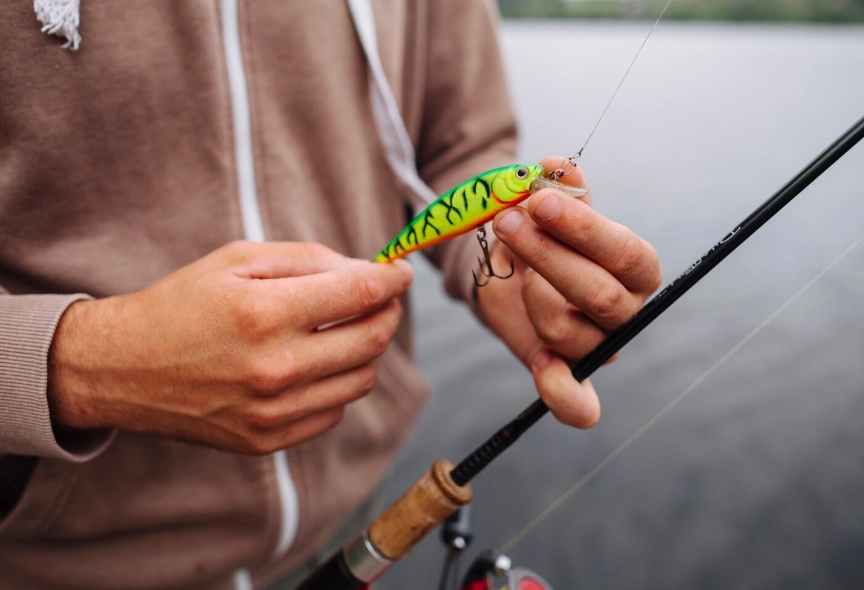
For reliable professional-grade tackle, Laike stands out as an essential name. With more than 20 years of manufacturing skill, the company excels in terminal tackle production. Whether for retail distributors or dedicated anglers, their expert services and dedication to quality mean that every hook withstands the battle. From robust carbon steel to accurate lead shaping, Laike supplies the effective tools needed to master saltwater conditions. When specific technical needs arise, the team offers direct consultation to source ideal equipment.
Why Do You Keep Losing Big Fish Right at the Strike?
The strike moment places maximum stress on gear, and many anglers face pull-outs or broken lines because they overlook the physics of deep-sea struggles. When a large predator strikes a weighted metal jig, it leverages the lure’s mass to dislodge the hook from its mouth.
Critical Leverage Issues
Standard fixed hooks function as a stiff lever, and when a fish shakes its head with force, the lure’s heavy form generates centrifugal force that rips the hook through the fish’s soft mouth tissue. This issue often leads to lost catches, since the rigid setup fails to adapt to the fish’s movements during the fight.
Poor Hook Penetration
Success relies on the hook point passing through the dense, bony structures of saltwater species, but if the hook proves too thick or lacks a sharpened point, it merely glances off the jaw instead of embedding securely.
Insufficient Saltwater Durability
The deep sea creates a harsh corrosive setting that degrades metal over time, and tiny rust-induced cracks can cause a hook to break when full drag pressure applies during a vertical battle.
When Should You Prioritize Lead Jig Heads for Bottom Fishing?
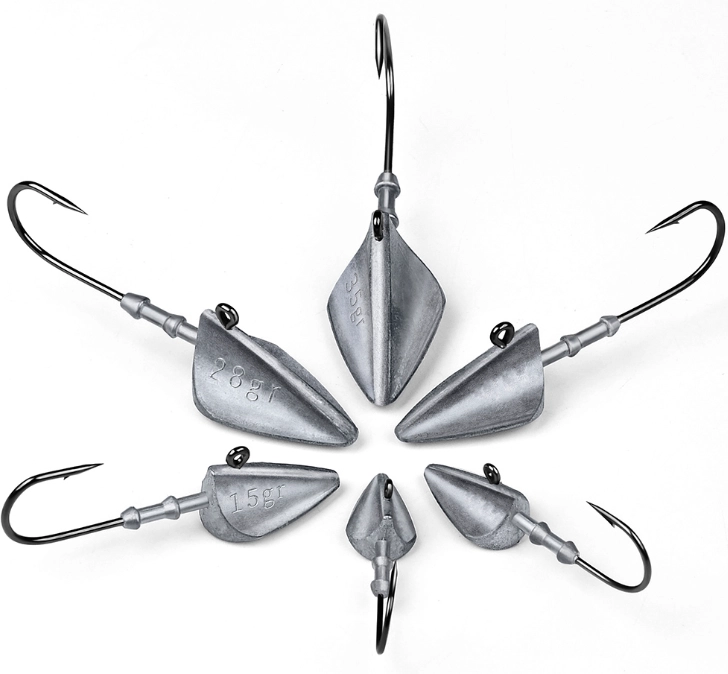
For targets in rocky areas, reefs, or sandy bottoms, a rigging method that delivers full control becomes necessary, and a jig head merges weight and hook into one piece, which enables anglers to sense the seafloor and position bait accurately. This configuration serves as the preferred choice for maintaining position in targeted strike areas.
Precision Seafloor Presentation
Using Lead Jig head Fishing hooks maintains a solid link to the bottom, since the built-in weight keeps bait from drifting away from hiding spots of species like Snapper and Grouper.
Integrated Weight Stability
The fixed structure offers a steady base for bait action, and because the hook point stays aligned with the weight, navigation over rough ground involves fewer hang-ups than with loose rigs.
Such stability supports consistent performance, which proves vital in varied bottom conditions.
Versatile Soft Bait Pairing
These hooks include a dedicated keeper barb that secures soft plastics firmly, so anglers can incorporate scent and realistic feel to the setup, which matters when fish approach bait with caution.
This feature boosts appeal, since it mimics natural prey more closely during subtle presentations.
Is the Carbon Steel Assist Hook the Ultimate Solution for Pelagics?
When shifting from bottom zones to fast pelagic targets like Tuna or Amberjack, conditions alter significantly, as these species strike with great speed and force, which demands a hook that operates separately from the lure. The assist hook design excels here for securing swift predators.
Maximum Hook-Up Ratios
By employing Carbon Steel Jigging Assist Hooks, a mobile target presents itself to the fish, and since attachment occurs through a supple cord, the hook enters the mouth ahead of the weighted jig.
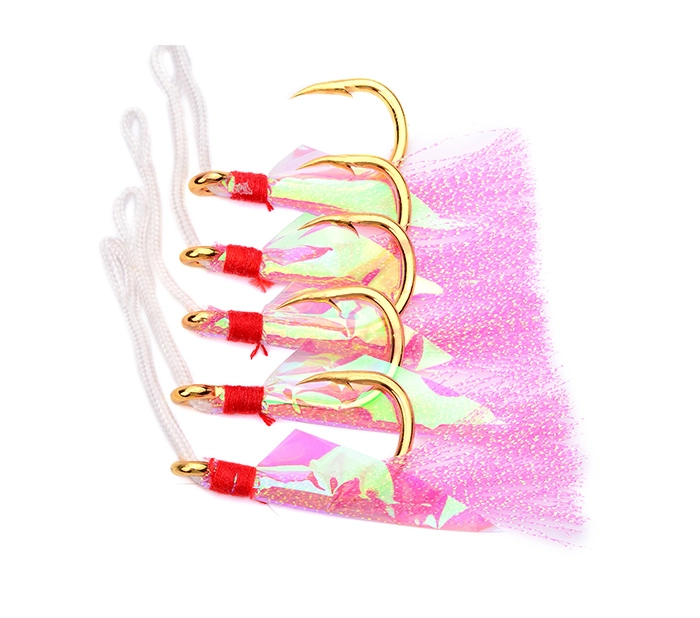
This advantage increases success rates, as it counters the fish’s rapid evasion tactics effectively.
Unrivaled Tensile Strength
High-grade carbon steel suits deep-sea applications because it delivers a better strength-to-weight balance than stainless options, which allows for slimmer profiles that penetrate easily while holding firm against heavy stress.
Reduced Lure Leverage
The flexible PE cord link removes the lever action, so even during thrashing or twisting by the fish, the hook follows the motion rather than getting pried loose by the jig’s mass.
How Can You Increase Visual Attraction in Low-Light Depths?
Beyond 100 feet, colors diminish and sight becomes limited, so a strong hook alone falls short; rigs must include elements like texture, movement, and shine to draw fish effectively in the ocean’s dim “midnight zone.”
Natural Cephalopod Mimicry
The Octopus Squid Skirts Jig forms a realistic outline that imitates key prey for deep-sea hunters, and the waving tentacles often provoke strikes where plain metal does not.
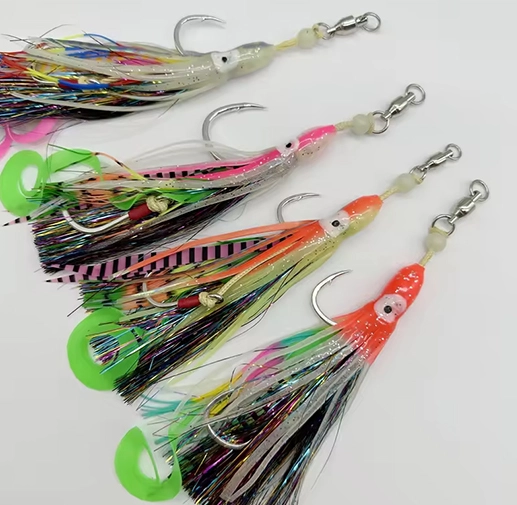
This imitation triggers instincts, since it closely resembles familiar food sources in motion.
Enhanced Luminous Visibility
In profound waters, glowing and UV-sensitive coatings play a crucial role, as these skirts act as signals that lead predators straight to the hooks amid the surrounding gloom.
Multi-Sensory Strike Triggers
Pairing the jig’s gleam with the skirt’s natural sway produces a full sensory effect, and this combination generates subtle water pulses that fish sense via lateral lines prior to visual contact.
What Makes Laike the Preferred Partner for Global Tackle Sourcing?
Locating a dependable supplier for terminal tackle poses difficulties for businesses, and a partner familiar with ocean rigors who delivers steady quality in volume becomes essential. Selecting a manufacturer with established success guarantees that stock aligns with demands from skilled anglers.
Professional OEM/ODM Services
Customization capability offers brands a key edge, since unique hook forms, masses, and finishes can adapt to local fishing methods or target types. This flexibility supports market fit, as tailored designs meet diverse regional requirements.
Rigorous Quality Control
Each hook faces thorough checks to verify tensile power and rust resistance, and this focus on precision avoids major breakdowns that disrupt angling trips.
Factory-Direct Supply Chain
Direct factory sourcing cuts excess costs and secures reliable flow, which enables competitive rates alongside superior gear for clients.
How to Choose the Right Rigging for Your Next Expedition?
Gear selection demands a clear review of conditions, where depth needs balance with species habits, and achievement follows from applying setups suited to exact depths and flows rather than relying on chance.
Target Species Analysis
For bottom residents that grip and stay, jig heads often perform better, whereas for bold strikers that dash away, free-moving assist hooks provide greater security.
Depth and Current Factors
Lead weights must correspond to water velocity, and if 15g to 35g heads fail to drop straight to the bottom, efforts waste away; a variety of masses allows adaptation to shifting tides.
Expert Equipment Consultation
Uncertainty about ideal setups for markets or vessels calls for specialist input, and technical details along with guidance appear through contact portals of leading firms.
FAQ
Q1: What is the main advantage of using an assist hook over a treble hook?
A: Assist hooks significantly reduce the chance of the fish using the lure as leverage to shake the hook free, and they are much less likely to snag on bottom structures.
Q2: Why is carbon steel preferred for deep-sea fishing hooks?
A: Carbon steel provides superior structural strength and hardness, allowing for a thinner hook that penetrates more easily and stays sharp longer than many stainless steel alternatives.
Q3: Can I use the Octopus Squid Skirts with both jig heads and assist hooks?
A: Yes, these skirts are highly versatile and can be threaded onto jig head shafts or slid over the cord of an assist hook to add extra visual appeal.